An IT guy who goes to the vineyard to clear his head
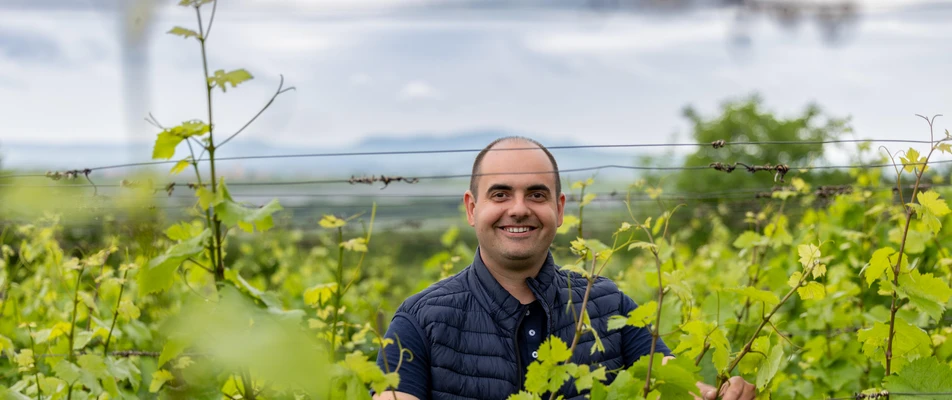
The road above Moravský Žižkov comes to an end, and from there on, the only way forward is a path winding through the rows of vines. It is here that Milan Svoboda ‘clears his head’ after work. During the day, he maintains servers and manages cloud systems and their security; in the afternoons, he picks up his secateurs and tends to the vineyard.
Milan Svoboda works in IT, but his other passion is wine. Not as a consumer, but as a winegrower and winemaker. He inherited the vineyard and has gradually expanded it. Today, he looks after it together with his family, covering an area of around 0.7 hectares.
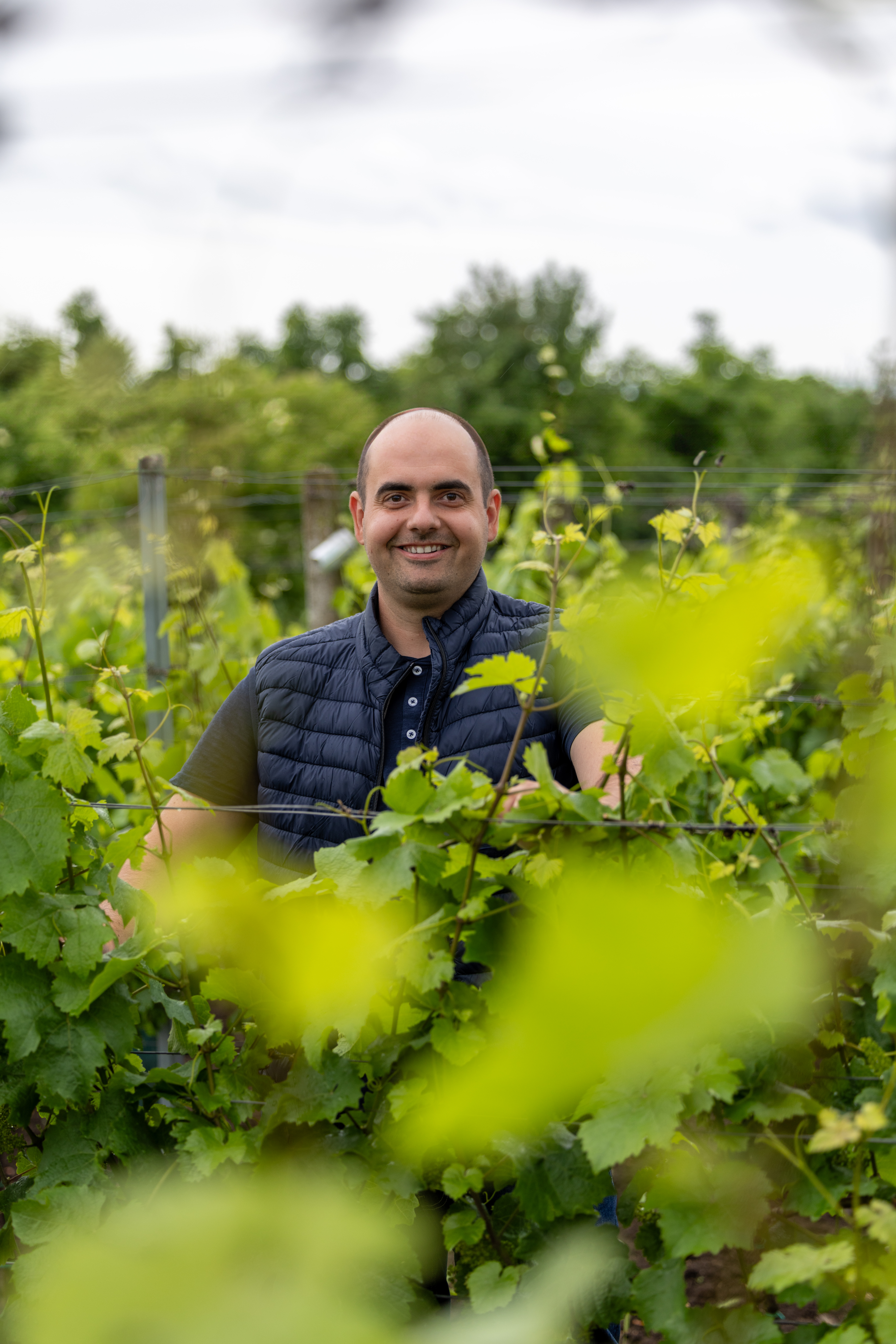
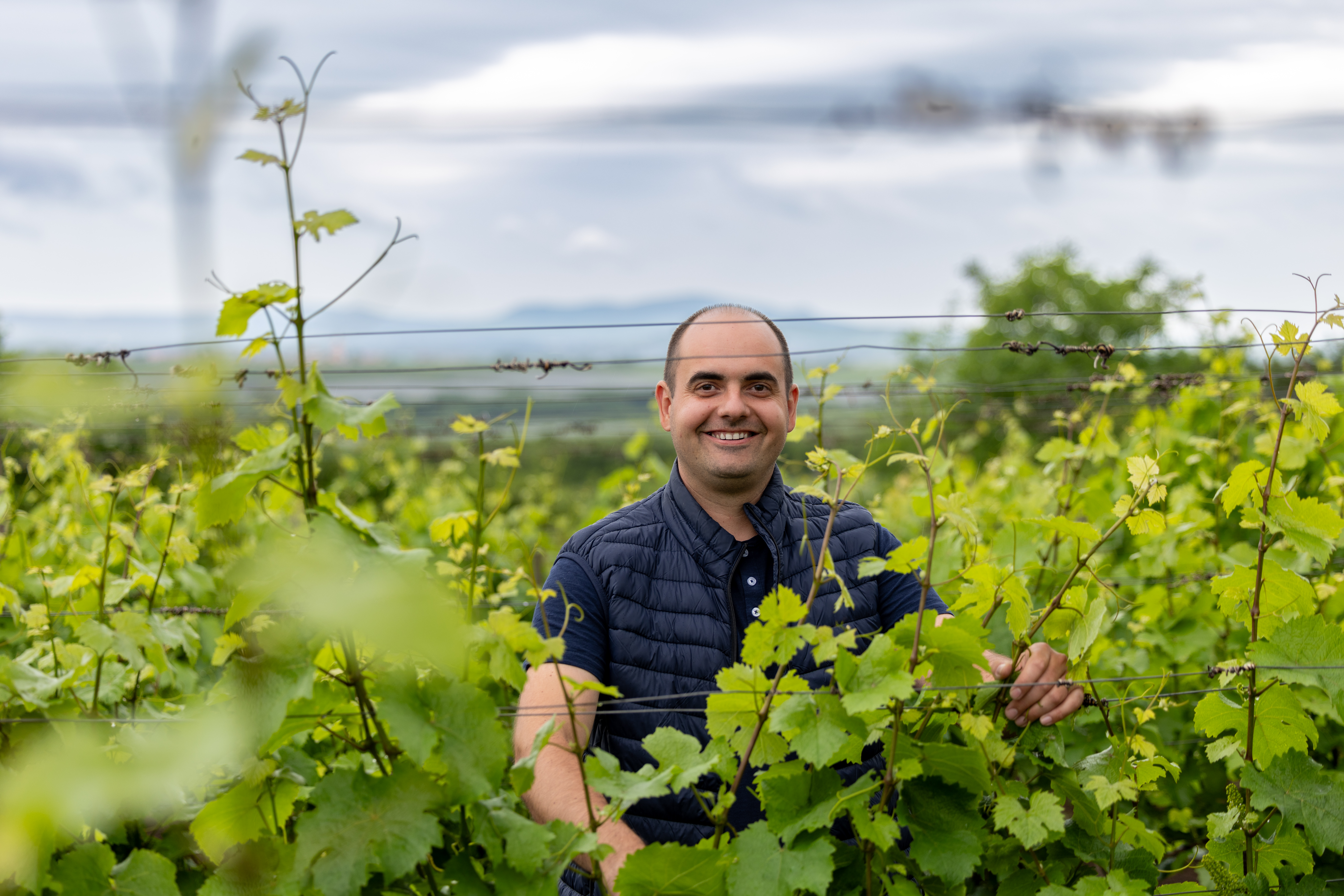
First, we walk together through his vineyard on the hill above the village. It is peaceful here, with views of Pálava and an atmosphere that clearly explains why Milan returns here day after day. “Originally, there were vineyards everywhere here. But people are getting older, and no one is taking over from them. It’s all left to lie fallow,” he explains.
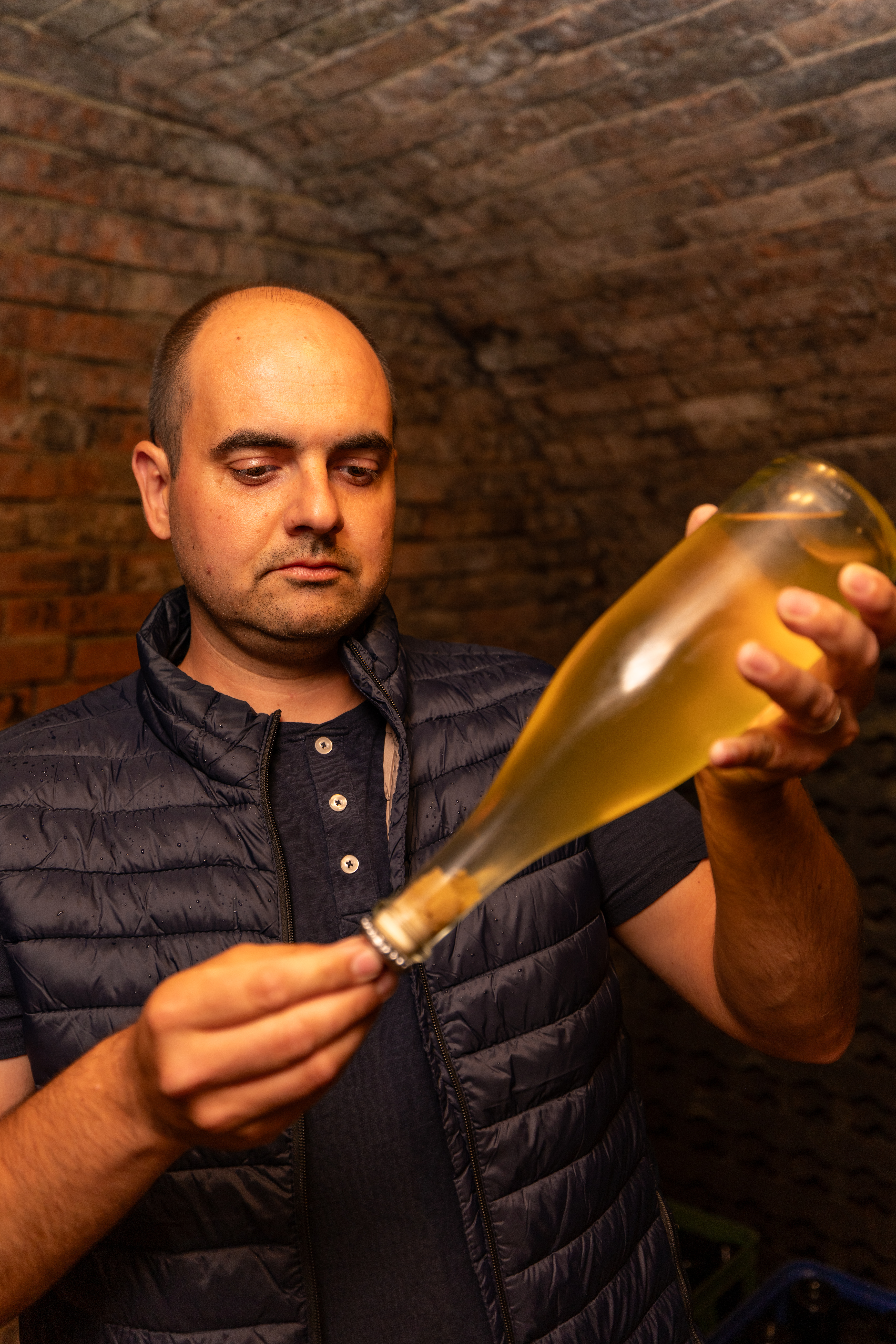
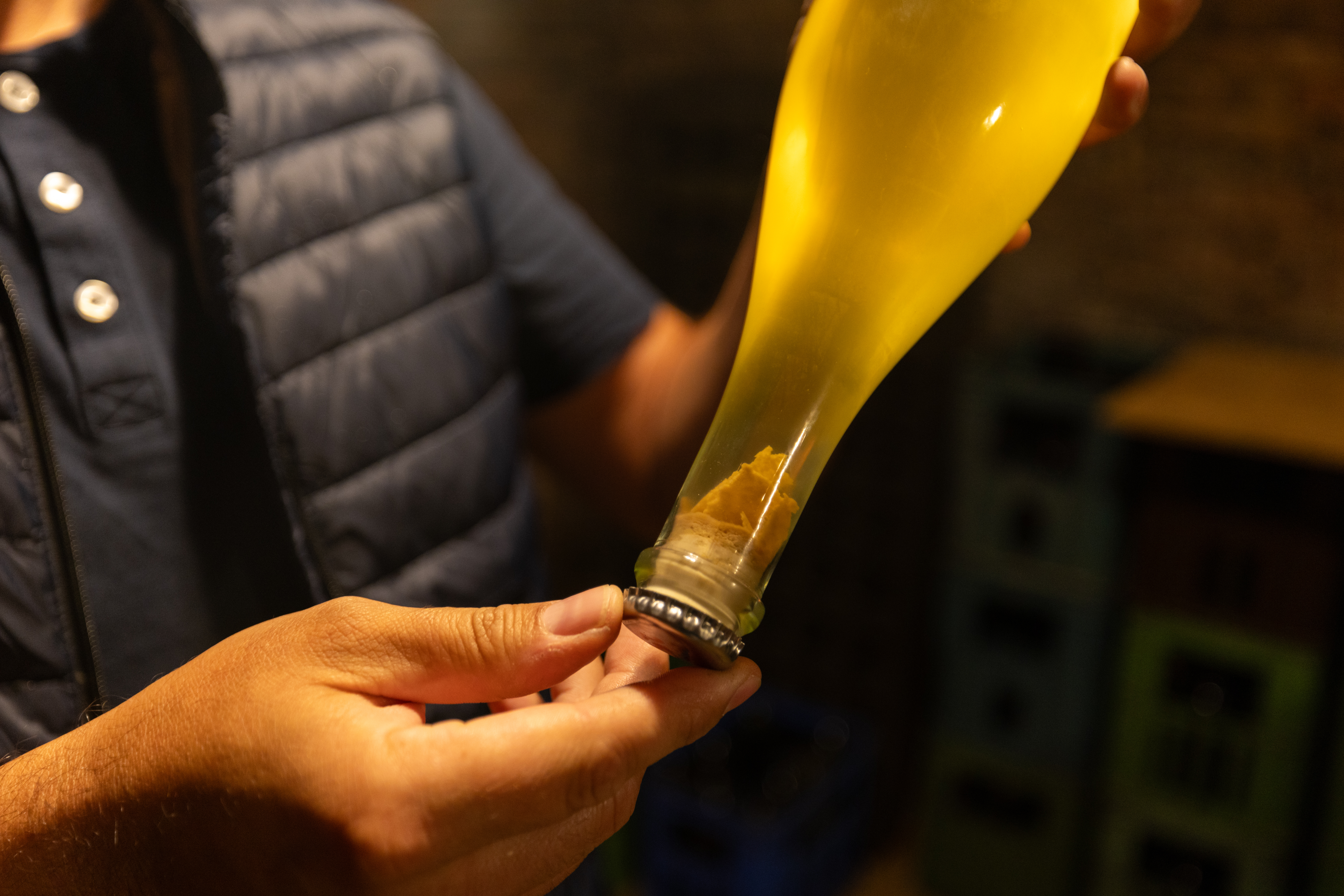
We then move to the cellar, which was once built by his grandmother’s brother. The family lost it over time, but Milan was sorry to see it go – and after many years, he managed to buy it back. The cellar has thus returned to its rightful owner and to its original purpose.
A second job that never ends
Winemaking is a job that never ends. For Milan, it’s a hobby that has, over time, grown into a second job. “Every season has something to offer – even in winter, the vines are pruned and the wines are being finalised. Perhaps the only time it’s quiet is around Christmas. You never come home and say to yourself: ‘I’m done’,” he explains.
That’s one reason, he believes, why the number of young winemakers is dwindling. “I’m 36 and here in the village I’m basically the youngest winemaker and vine grower. I think we’re one of the last generations to do this more as a tradition than as a business,” he says.
When asked when he himself first ‘immersed’ himself fully in wine, he gives a vague answer. “It’s hard to pinpoint. We’ve always gone out to the vineyard and done something there. I’ve been devoting a lot of time to it for, say, 15 years. To tell you the truth, I don’t know when I made my first wine. There have always been some vineyards in the family – about 15 ares. I had to restore a large part of them, and then I bought more land and planted new vines. Very little of the original vines remain,” he explains.
Essentially the whole family helps out with the work when needed. Together, they look after 0.7 hectares of vineyards.
From servers to wine labels
: Milan studied computer science at the Brno University of Technology, but the city never appealed to him. “As soon as I could, I’d travel home from my halls of residence. I don’t really enjoy city life,” he says.
Today he works at MND as a systems administrator – looking after the servers, the cloud and security. At first glance, this seems unrelated to winemaking. But on closer inspection, it isn’t. His systematic approach and technical mindset are also reflected in the wine.
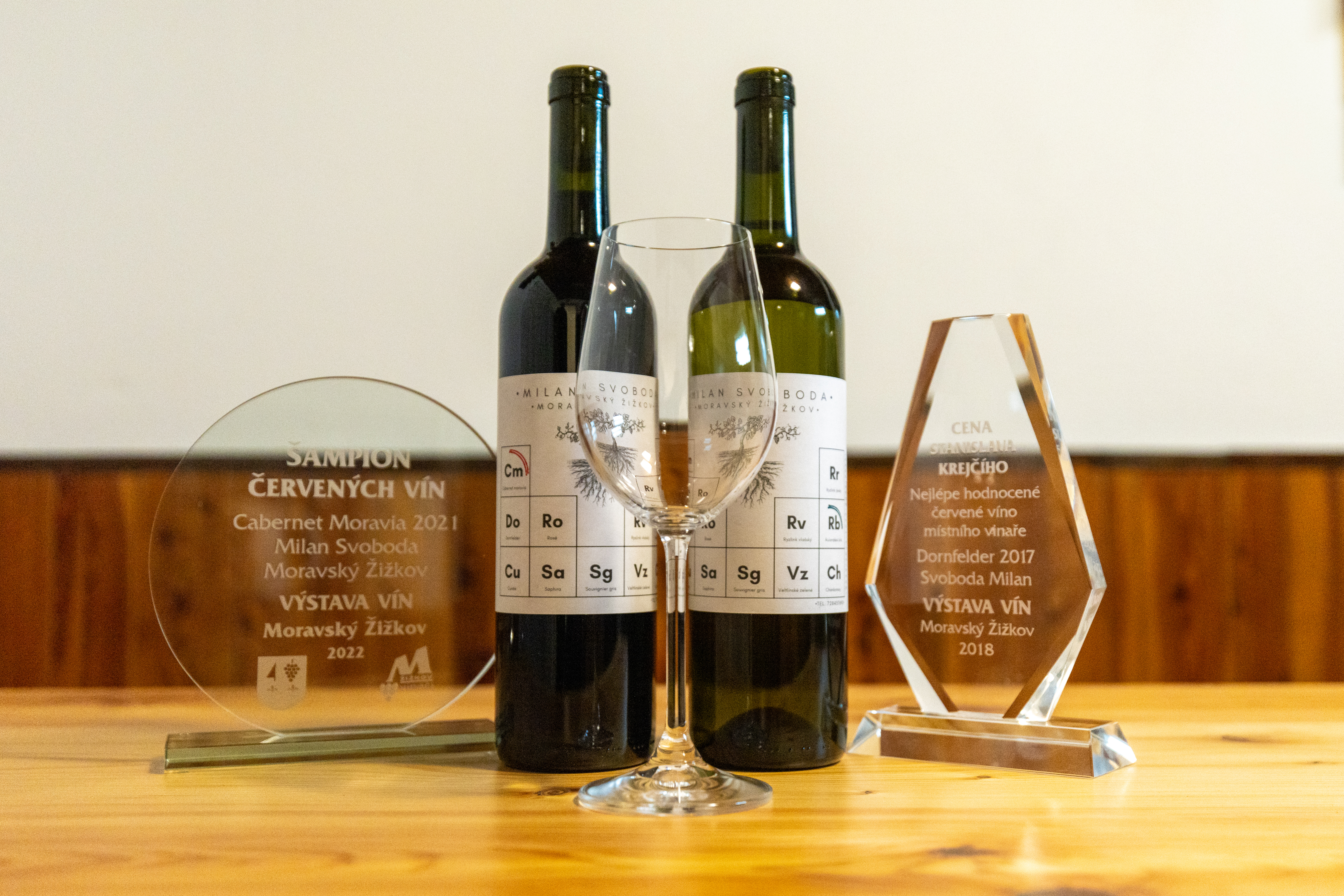
Take the labels, for example. They resemble the periodic table of elements – they list all the grape varieties he grows, and each specific wine is simply identified by its colour and vintage. “I don’t have to print twenty different types of labels,” he explains, describing this simple and functional solution.
He takes the same approach to the actual production of wine. He studies biochemical processes and is interested in how everything works. “I want to understand these processes from a technical perspective too. New studies are constantly emerging on what influences flavour and quality. It’s a never-ending journey of discovery,” he adds.
Wine as the best defence against burnout
At the same time, working in the vineyard and the cellar offers a break from his day job. “I enjoy the whole process – from the soil right through to bottling. It’s wonderfully varied. When you leave work after eight hours at a computer, the vineyard is the ideal defence against burnout. It’s never a routine. You’re out in the fresh air, and sometimes it’s physically demanding too,” he points out.
It really is hard graft at times, and it’s something you can’t put off. To a large extent, it dictates the rhythm of your life. A vineyard isn’t something you can just get rid of for a year or two if you get fed up with it for a while. You can’t just take a break from it. Even holidays are planned around the wine and the vineyards.
Now, at the start of June, we’re at the stage where the vines are in bloom – this is the most important time of year for the vineyard. But mainly in terms of the weather; there’s simply nothing you can do about that. The hardest time is the grape harvest, which starts around mid-September, when the grapes have to get into the cellar as quickly as possible.
Milan harvests only with his family, so in an ideal scenario there are five or six of them. And it’s work from morning till night. The advantage is that all his vineyards are in one place. The downside, however, is that if there’s a hailstorm or a spring frost, everything gets hit at once.
A tradition that brings people together
Milan emphasises, however, that hard work has its positives. “You meet up with friends who know their stuff, and we taste samples of the different wines. It’s a form of culture and socialising,” he points out.
He doesn’t have a favourite wine himself. Or rather, he enjoys a different one every year, because you never make the same one twice. He admits that he doesn’t drink wine every day. “If I drink a bottle in a week or two, that’s a lot. Usually when I’m with others,” he adds.
He regularly enters his wines into local competitions to get feedback. And he’s racking up the accolades. He values the title of Red Wine Champion at the exhibition in Moravský Žižkov most highly, where he triumphed with his Cabernet Moravia.
“It’s actually a somewhat underrated variety, but the expert panel agreed that this was the best red wine of the year – and there were about 650 samples of different wines there,” he says proudly.

Editor-in-Chief
Other articles
Shallow drilling campaign to start next year based on results of latest 3D seismic
For next year, our geologists have prepared a series of wells that they have identified based on the latest large 3D seismic survey. The campaign will start in the second half of the year in the Dubňany and Skoronic area. During December, however, work will begin on the last well of the season - Mikulov 3.
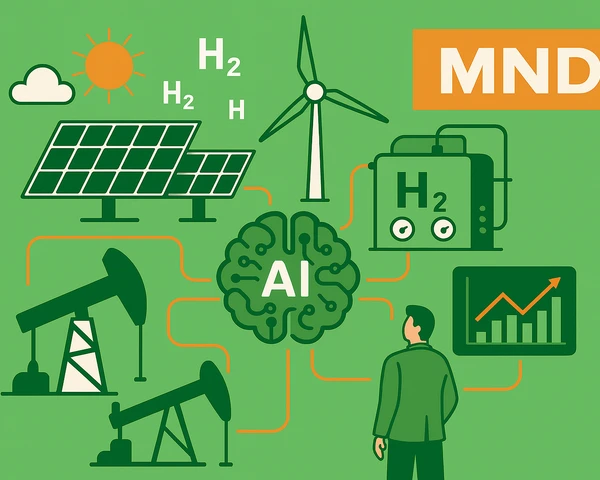
Artificial intelligence is already helping in MND
In recent years, Artificial Intelligence (AI) has become one of the most discussed technological phenomena. For a long time now, it has not only been discussed in the context of science fiction films or scientific research institutes. Thanks to increasingly powerful computing and the availability of data, AI technologies have seen a huge boom in recent months. AI is now making real inroads into all aspects of our lives, from work to healthcare, science, education and entertainment.
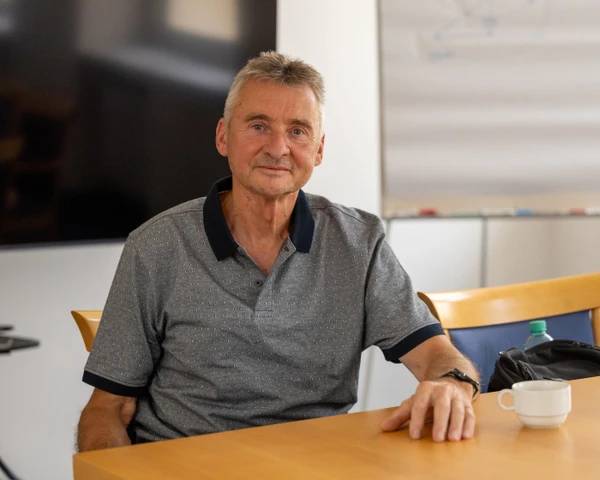
50 years with MND. Mirek Konečný retires at the end of the year
Miroslav Konečný will retire at the end of the year. He started at MND in 1975 as an apprentice and will finish in 2025, bringing to an end an incredible 50 years at MND.