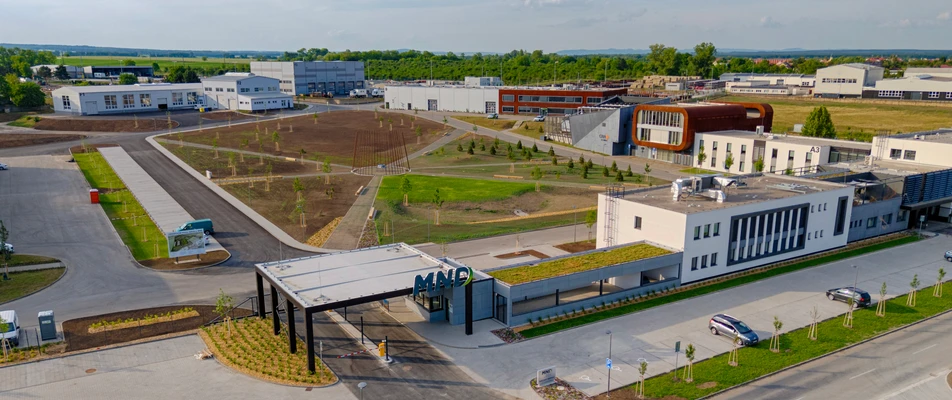
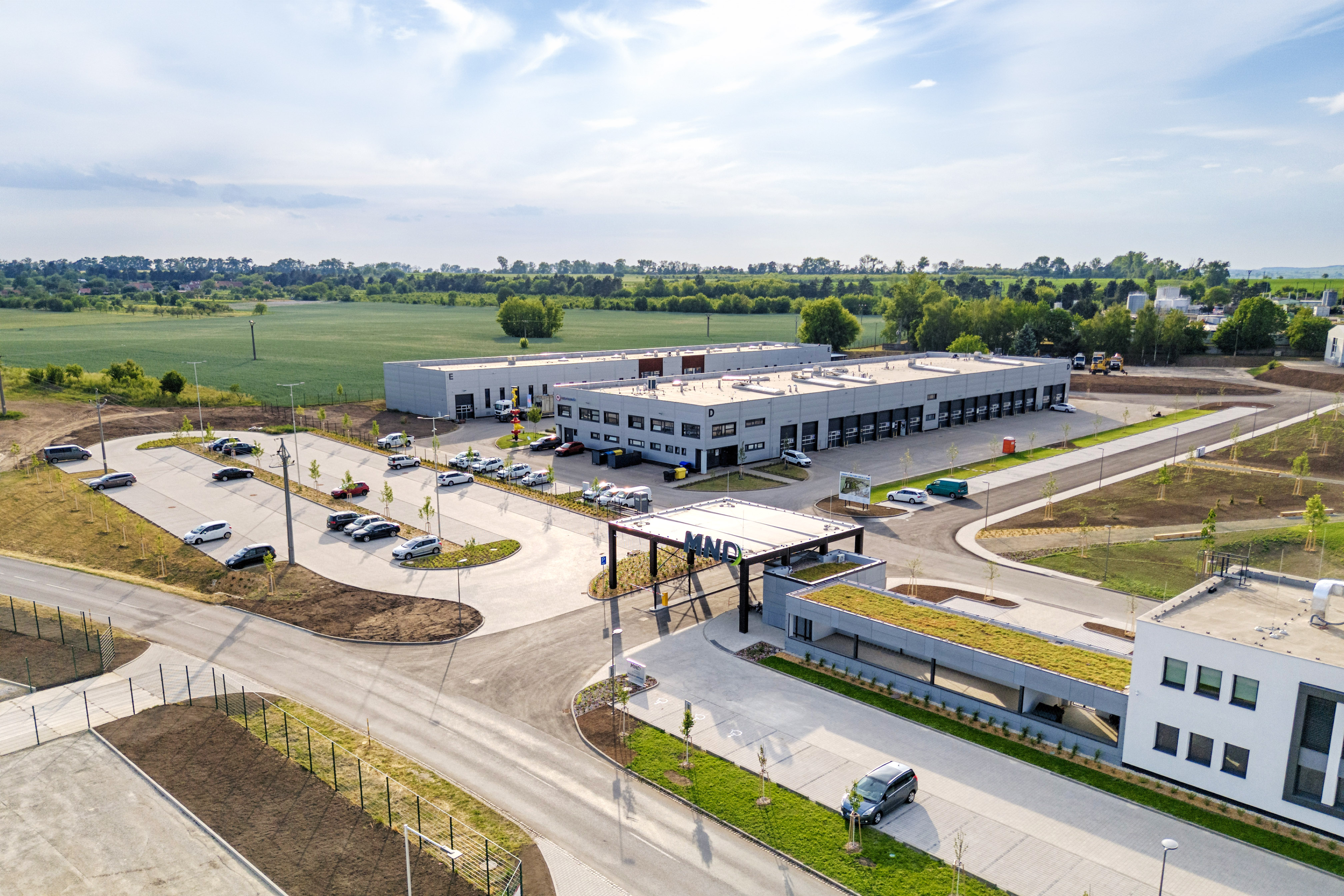
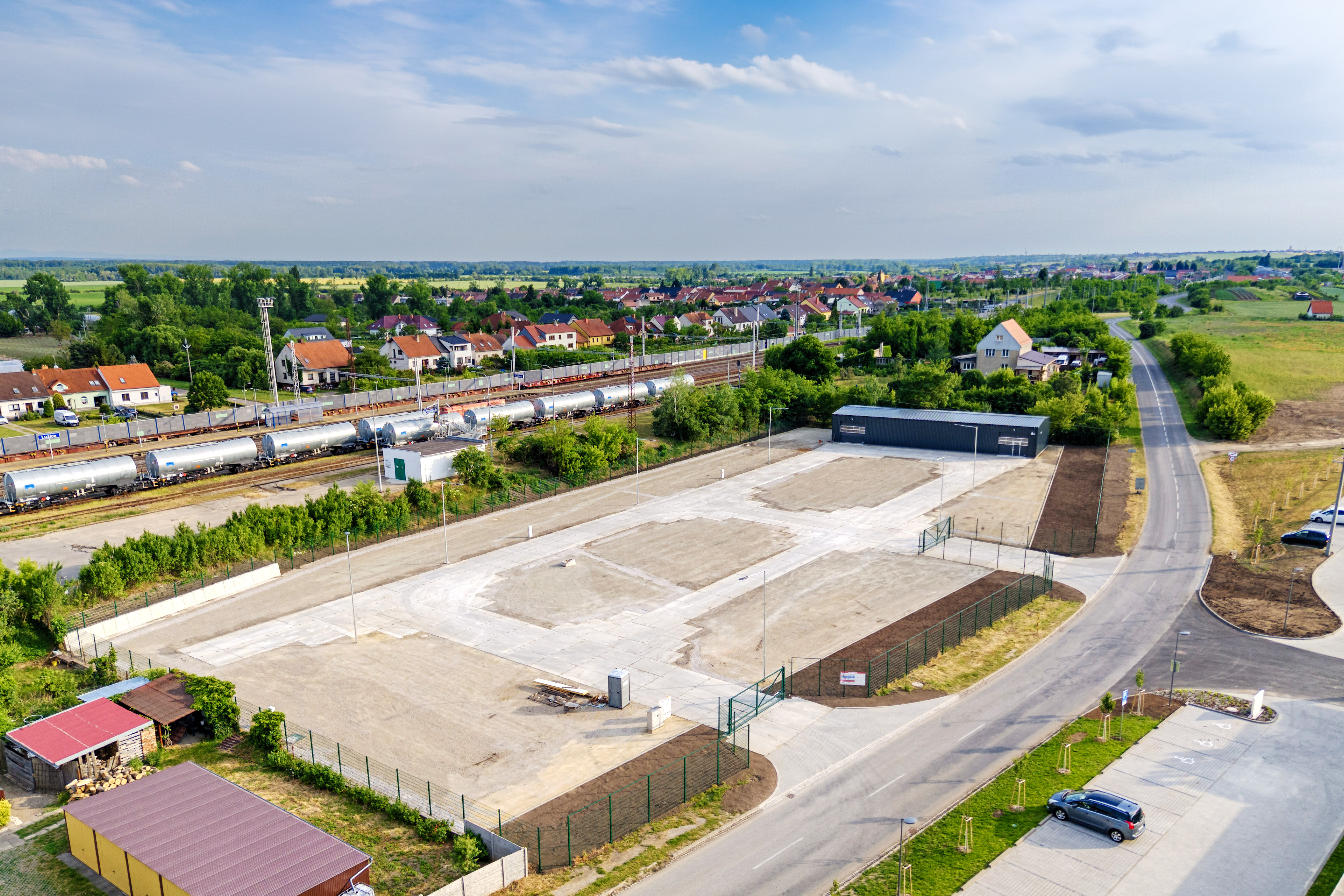
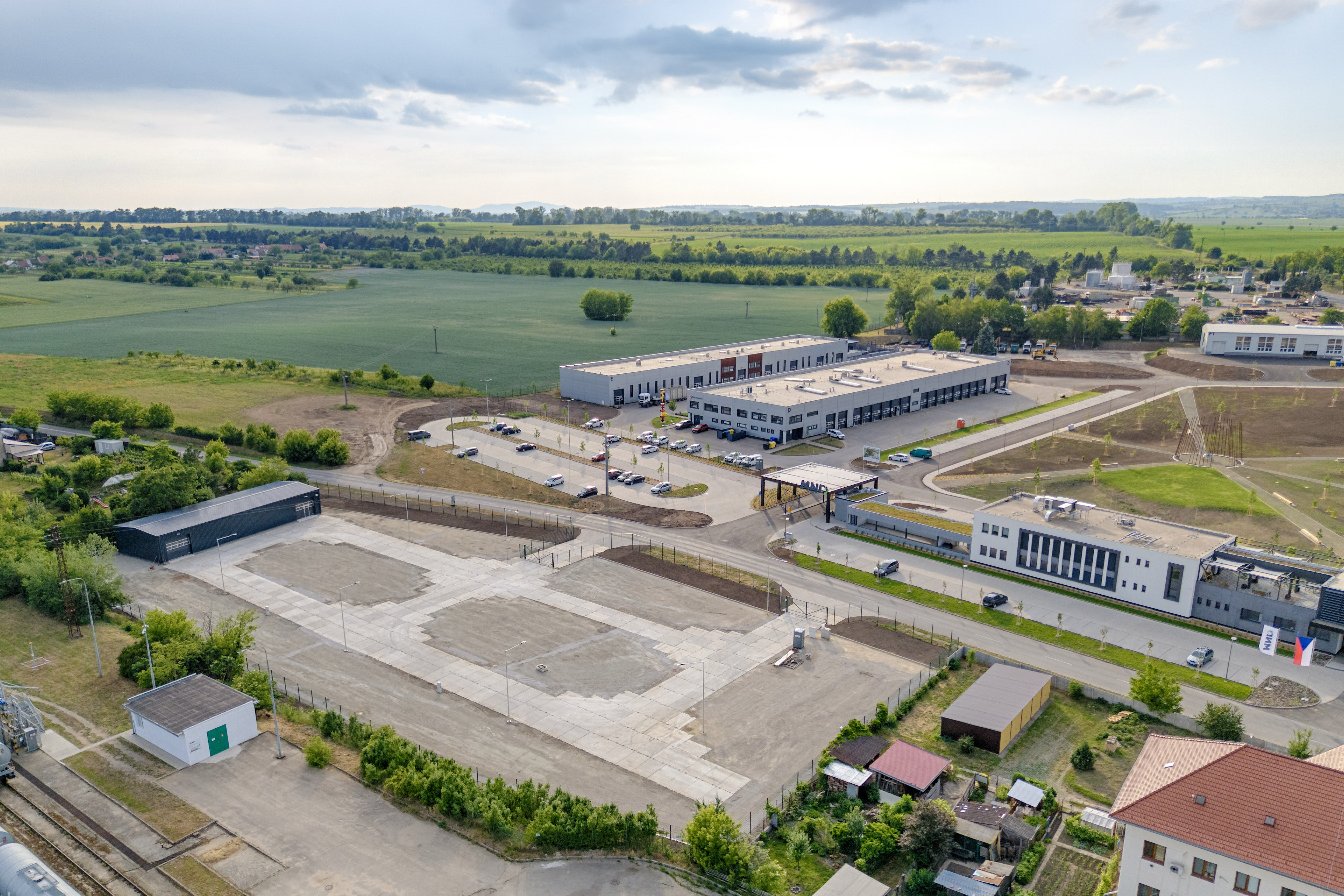
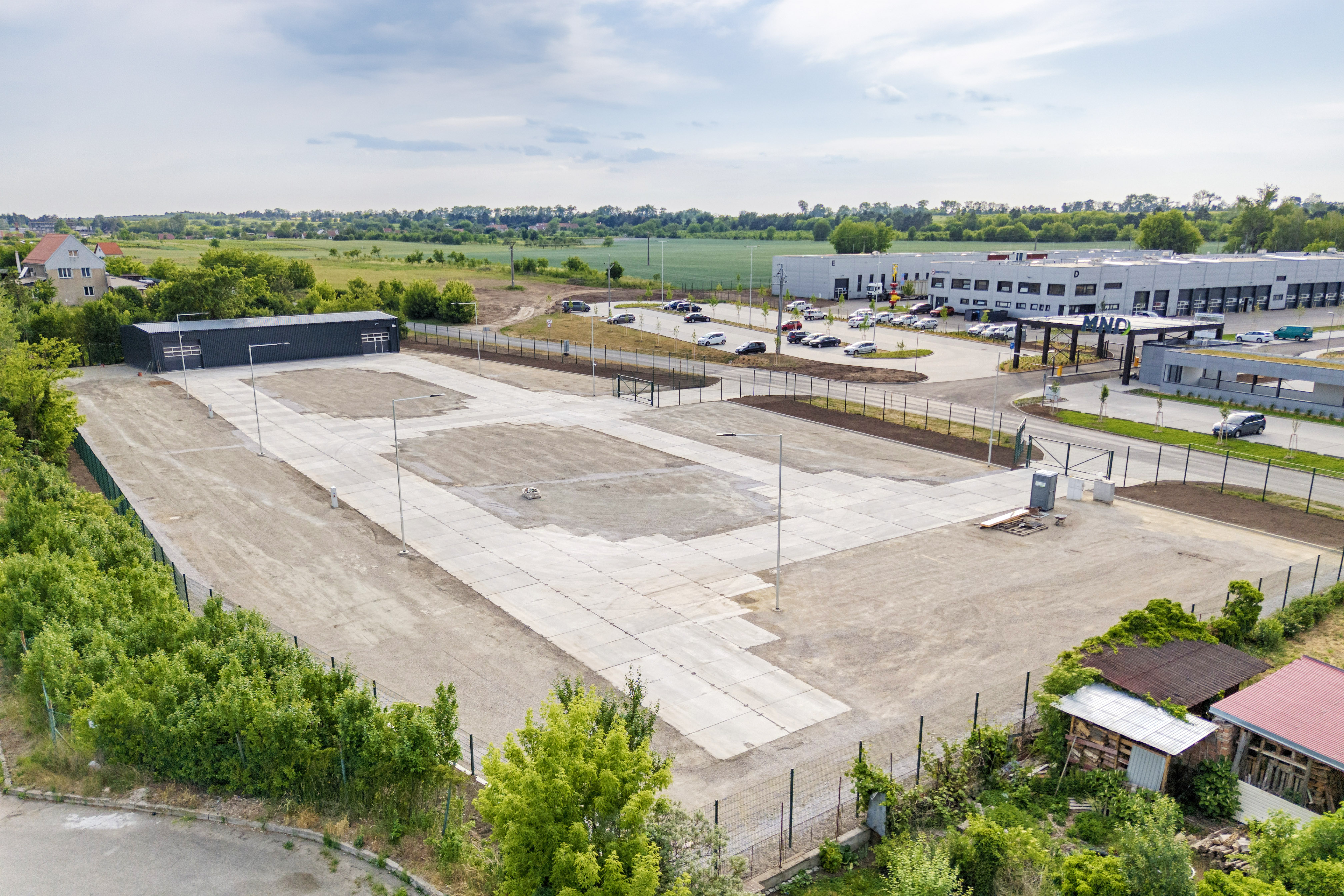
The Lužice complex following renovation
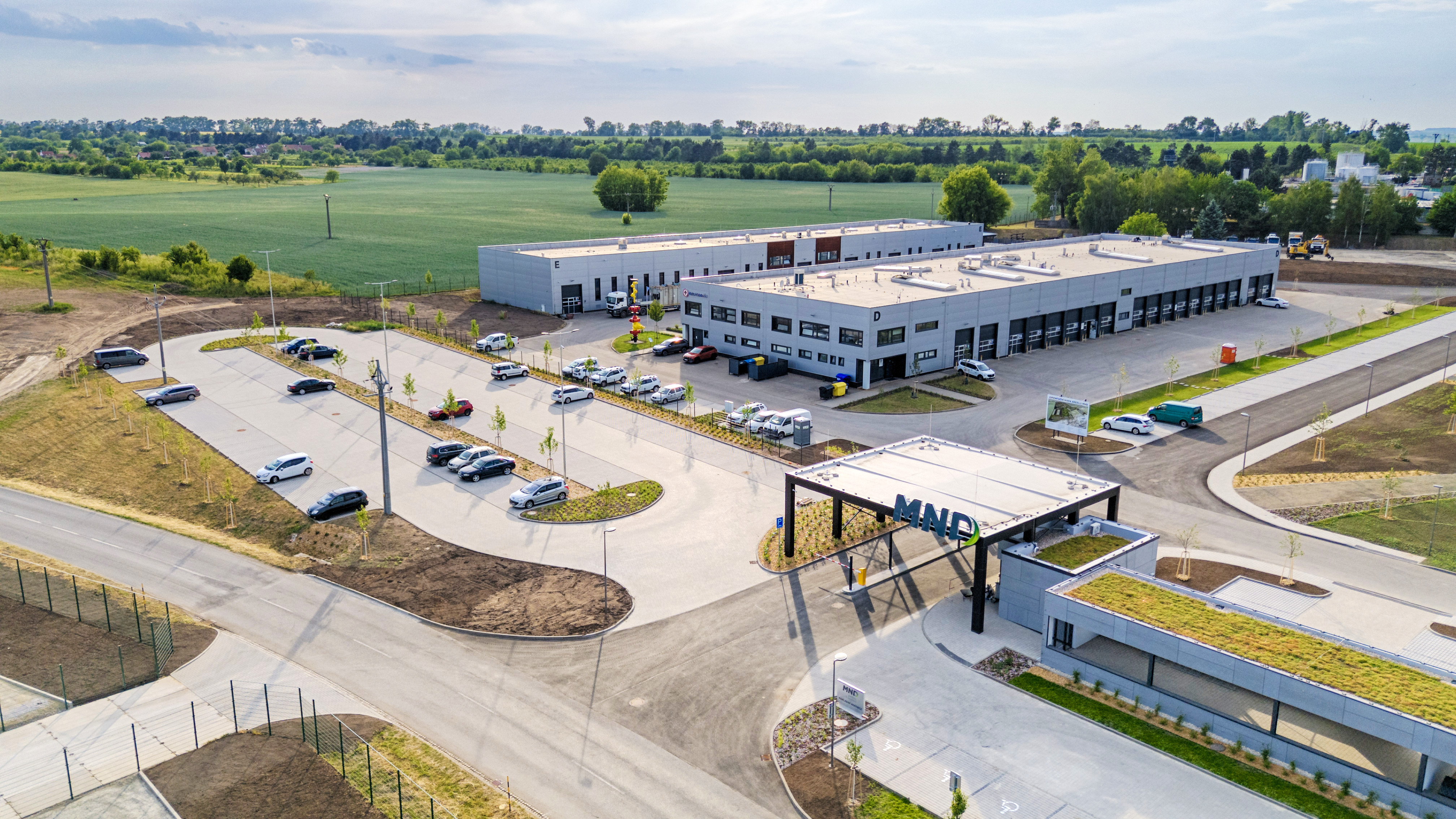
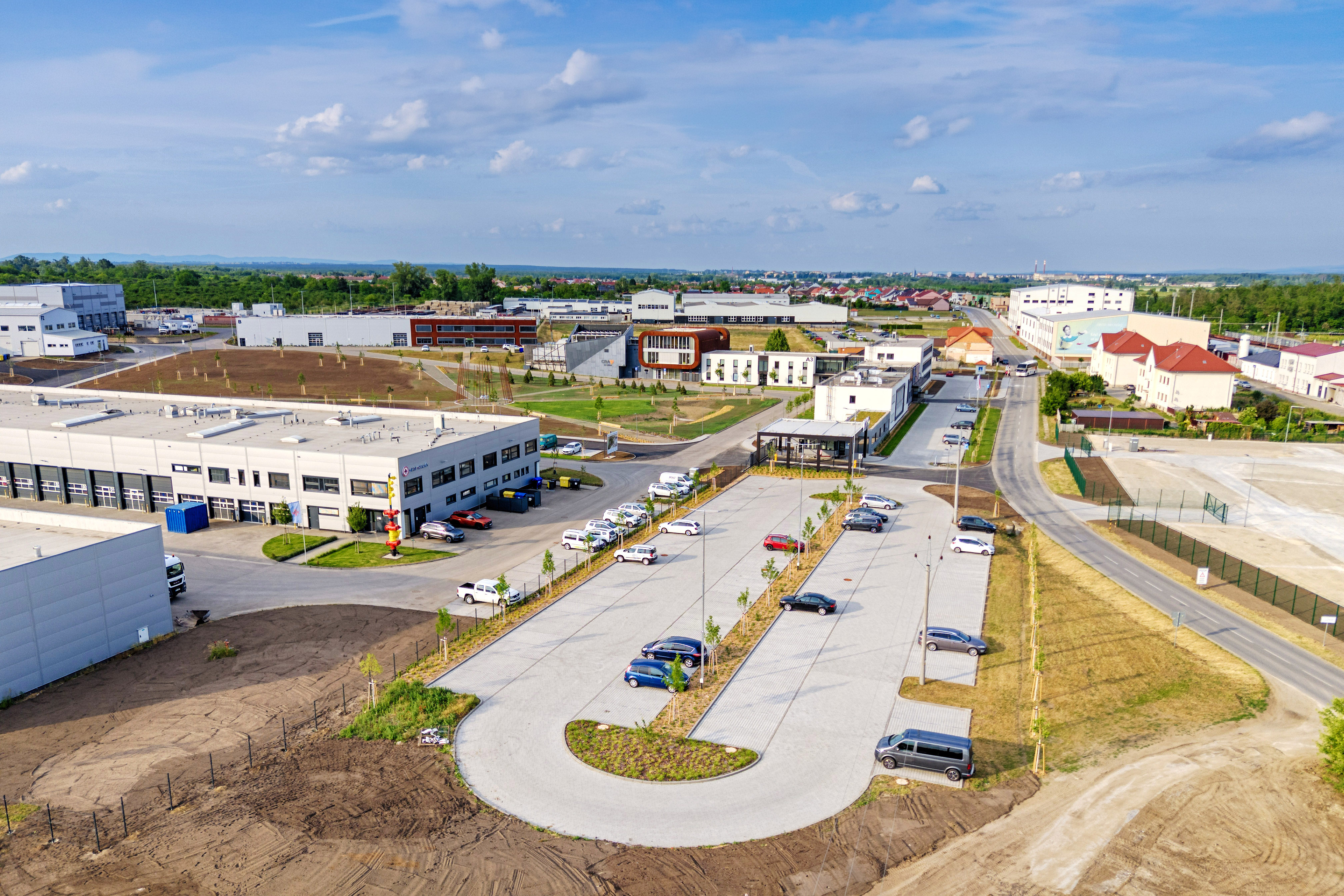
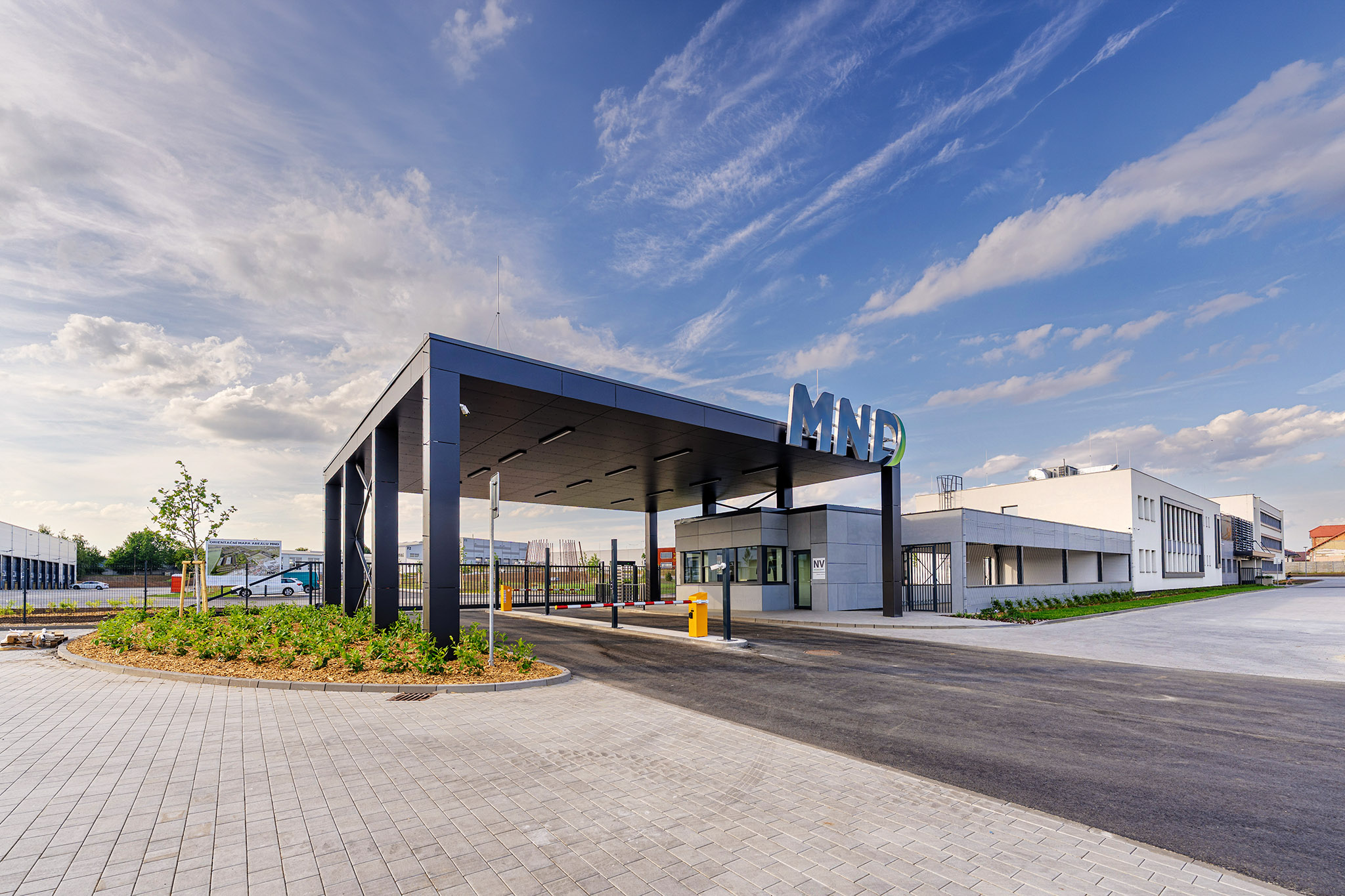
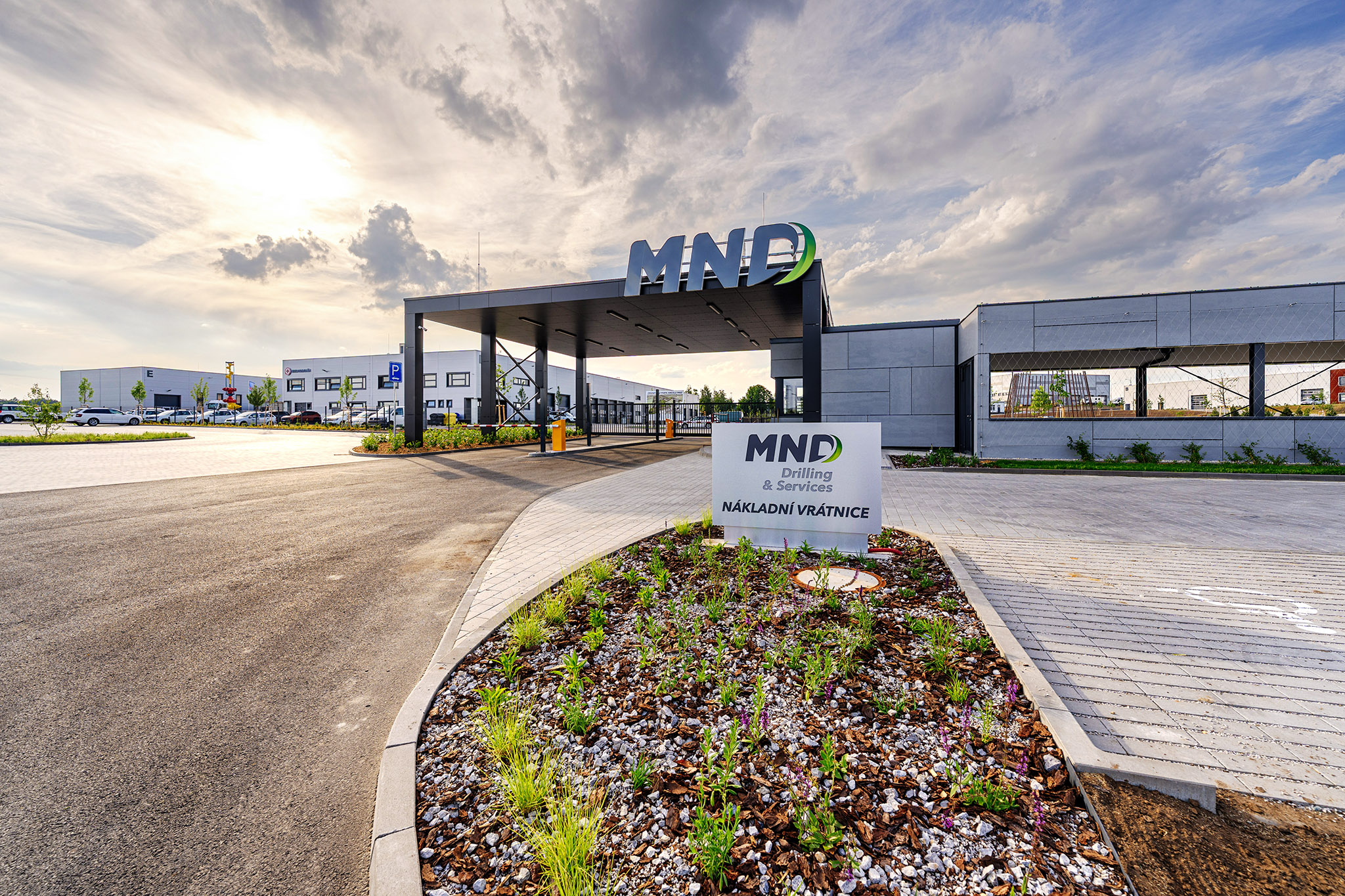
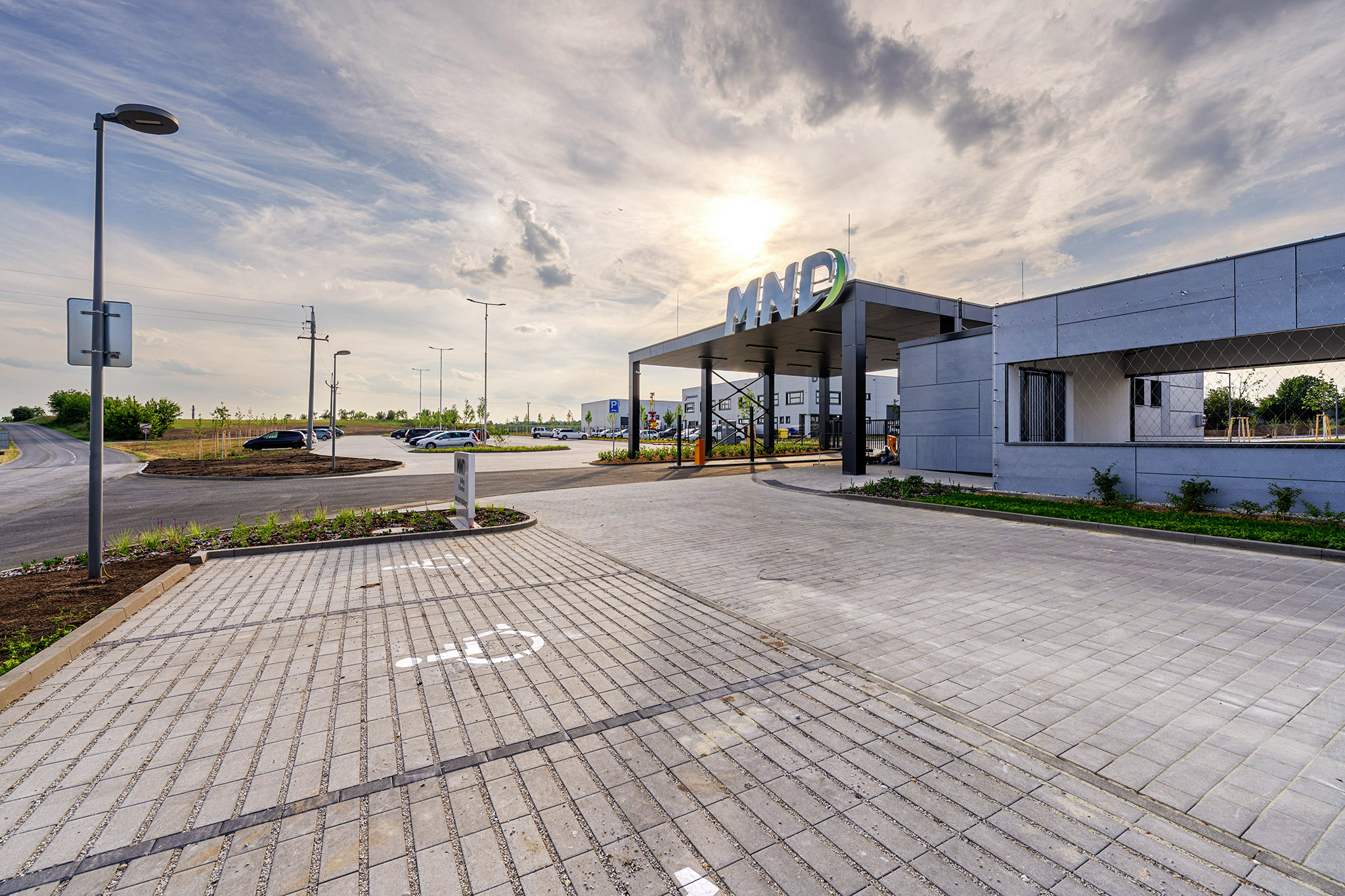
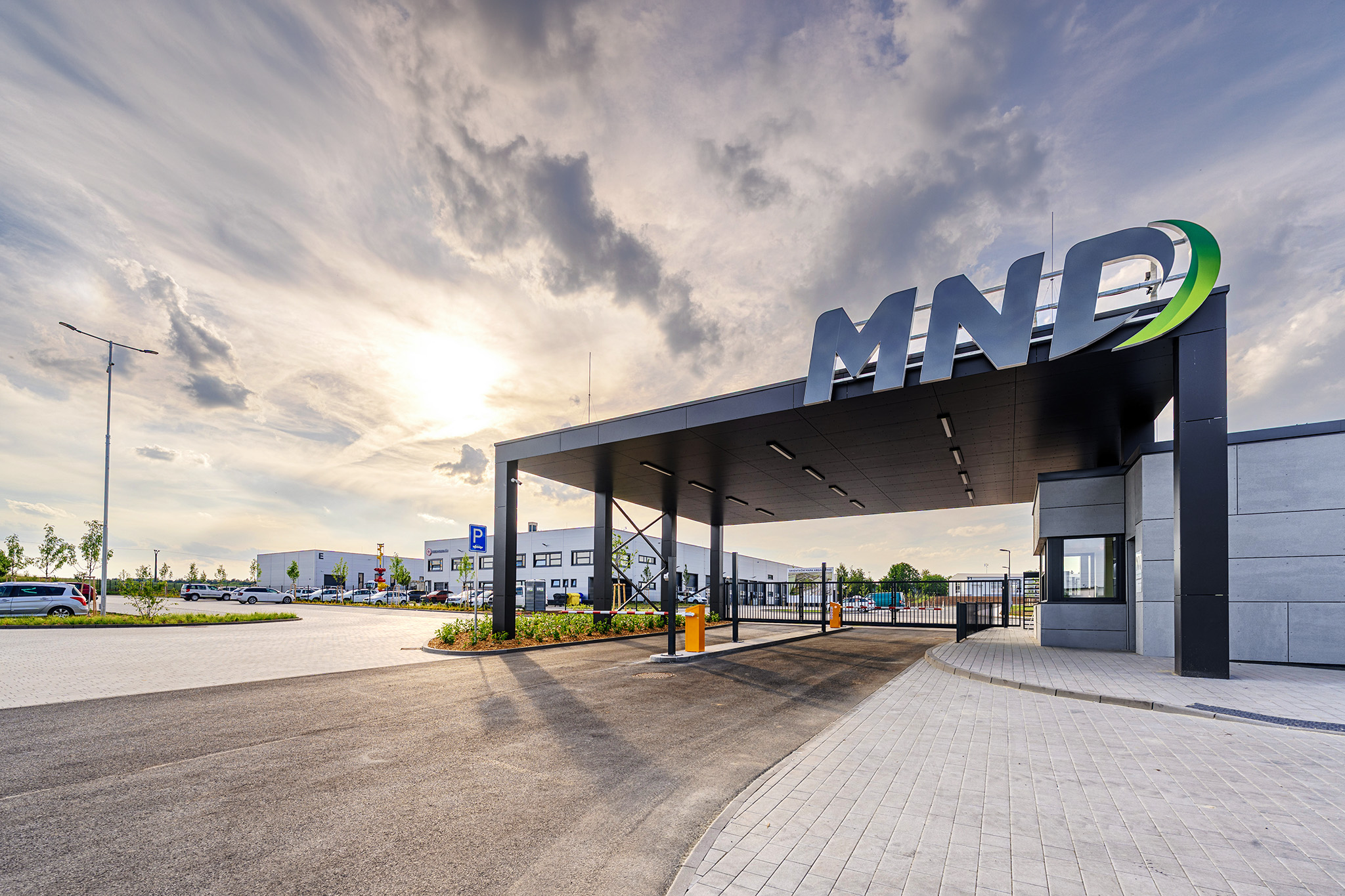
The second part of Karel Komárek’s two-day visit took him to the refurbished MND Drilling and Services site in Lužice. The project, involving an investment of 250 million crowns, not only saw the restoration of the site, which had been devastated by a tornado, but also its fundamental modernisation — from new operational areas and a central park to a comprehensive rainwater management system.
The grand opening of the refurbished complex was accompanied by a surprise. Karel Komárek arrived unannounced. For the staff, this was not merely a formal visit – after the tour, he met with them in person and then addressed them.
The transformation of the entire site
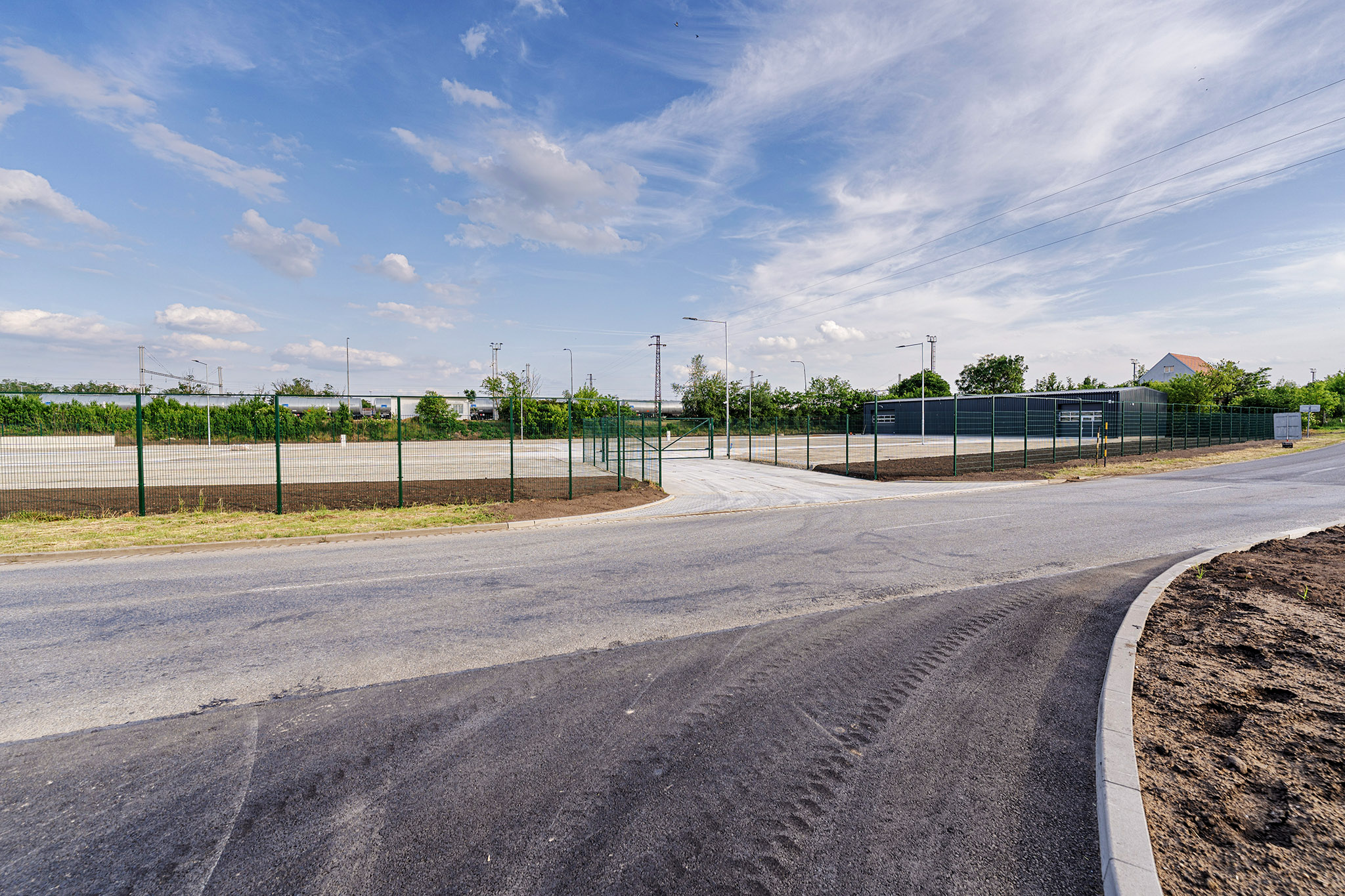
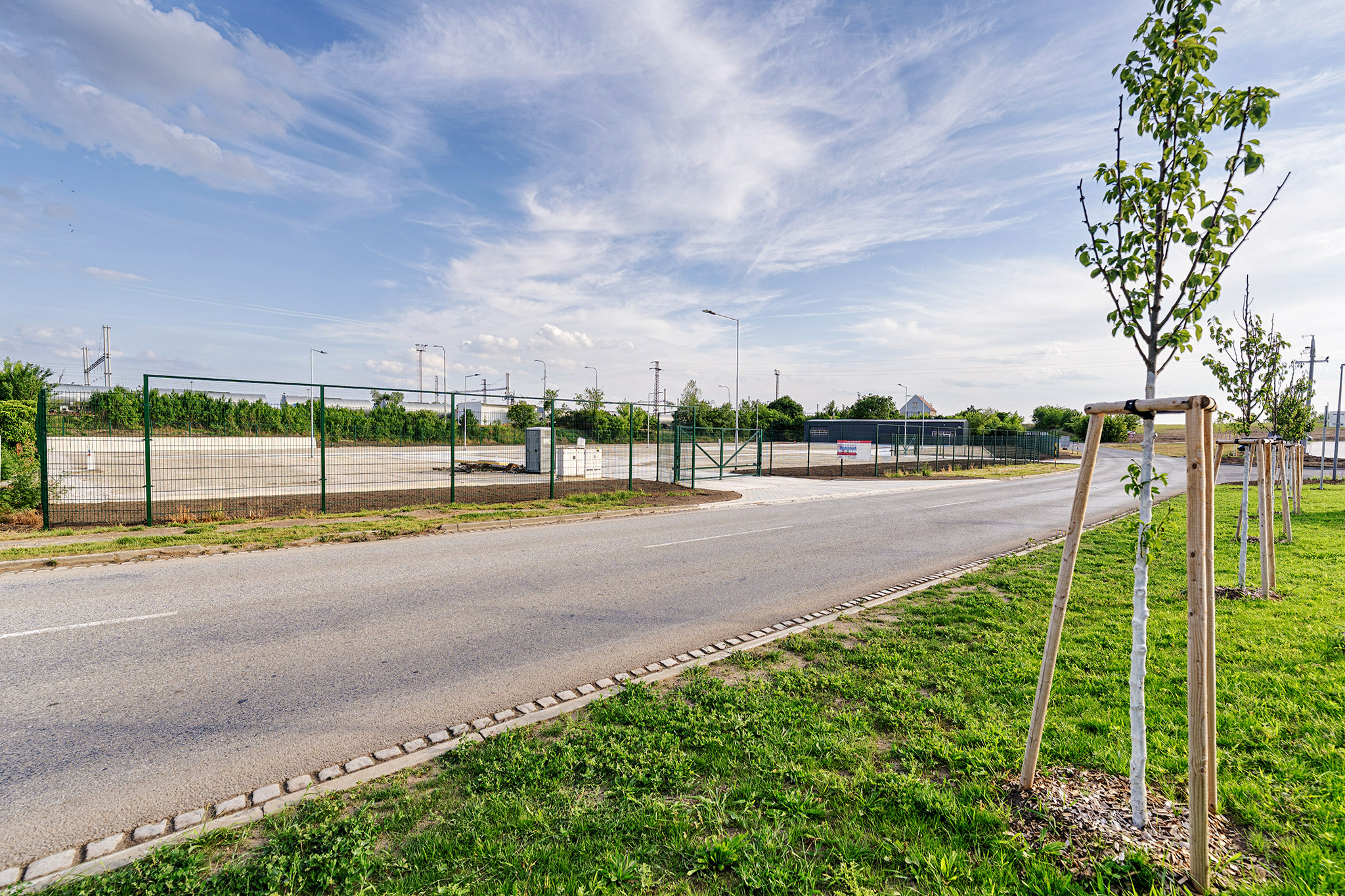
The site in Lužice underwent refurbishment costing approximately 250 million crowns. This involved not only repairing damaged buildings, but also a complete overhaul of how the entire site operates. Of the site’s total area, which covers approximately 17 hectares, more than 90 000 square metres have been refurbished – that is, more than half of the total area.
The project also included the construction of 46,000 square metres of new paved areas and the refurbishment or construction of buildings with a total floor area of 2,750 square metres. Logistics also underwent a fundamental transformation. Within the site, machinery was moved across an area exceeding 20,000 square metres, and tens of kilometres of pipework and drilling equipment were handled.
“The refurbishment took place whilst operations were in full swing; logistically, it was quite challenging. However, we managed to recycle more than 12,000 tonnes of concrete from old, unsuitable areas. We used it as a base material for all the newly constructed linear structures,” pointed out René Kachyňa, Director of MND Drilling and Services.
“As part of the earthworks, we achieved a balanced result – we used the surplus soil from one section in the park – so we didn’t have to remove anything. Thanks to this recycling, we managed to save around 20 million crowns, which we used to repair one hall that wasn’t included in the original plan,” he added.
A site transformed
The change is evident at first glance upon arriving at the site. New surfaces, upgraded access roads, greenery and a clear layout give the whole place a completely different character to the one many remember from before the tornado.
Karel Komárek first walked around the site. He stopped in the central park, which now forms the natural centre of the entire site and is adorned with derrick poles – a symbol of the industry. The park was not created merely as an aesthetic feature, but as a functional space for staff, which also helps to manage water resources.
Water that stays where it falls
One of the key themes of the redevelopment was rainwater management. The site had long struggled with the effects of drought, so the project focused on ensuring that as much rainwater as possible remained on site.
Blue-green infrastructure formed part of the solution. Water is collected, infiltrated and reused – for example, for irrigation. Infiltration areas, retention features and green roofs and façades were created. The total rainwater storage capacity amounts to 108 cubic metres. Separating rainwater from wastewater has led to savings of up to 80 % on charges.
An investment that sends a signal
Following the tour, Karel Komárek gave a short speech. He praised the transformation of the site and the significance of the investment, emphasising that the quarter-billion investment confirms the importance of MND within the group.
The atmosphere of the visit was relaxed, and the official part was followed by an informal meeting between staff and Karel Komárek.

Editor-in-Chief
Other articles
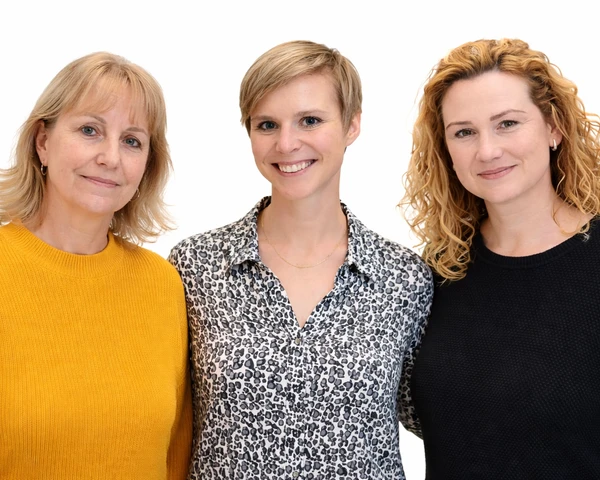
Women in MND: Energy that takes many forms
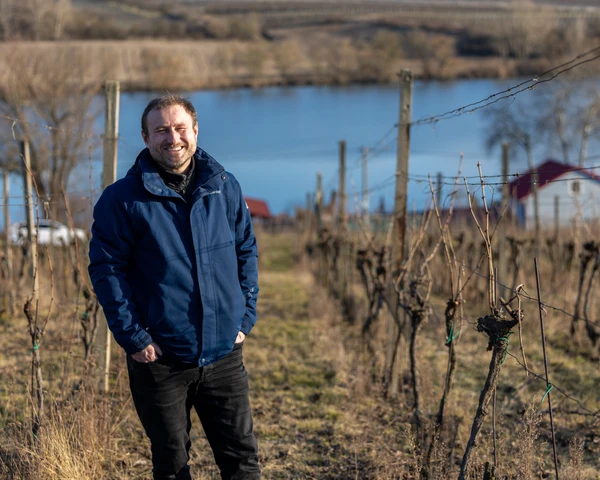
He proposed. And he got a vineyard to go with it.
If you’d met Ondřej Zháněl when he was eighteen and told him he’d one day become a winemaker, he’d probably have tapped his forehead in disbelief. The son of an artistic blacksmith, growing up in Břeclav, he had a field behind his house where, at most, beetroot and potatoes were grown. Wine? That certainly didn’t feature in his plans back then.

"AI is like fire. Good servant, bad master."
Artificial intelligence is now part of almost every profession – and if we can use it properly, it can be of great help to us. We spoke to Libor Sedláček, an HR analyst at MND who has been actively using AI for several years, about his day-to-day experiences.