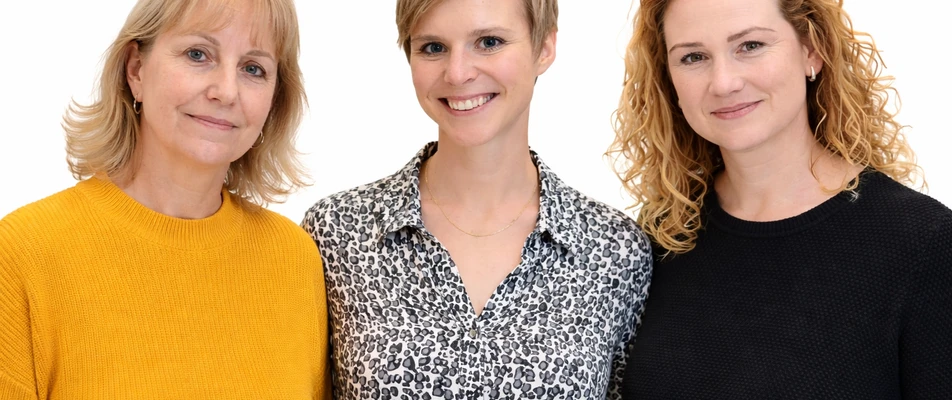
Women in MND: Energy that takes many forms
How did you get into this line of work?
Alena Divišová, Chief Trader, MND Trading: I got into trading straight after school. I joined a bank that was looking for someone with a strong grasp of maths and programming skills. I was supposed to work partly as a programmer and partly as a junior FX trader. After five months, a new head of trading joined the bank and told me he didn’t want any programming in his team; he wanted nothing but trading. I was given the task of making a certain amount of money through speculation, on the understanding that either I would succeed and stay, or I would leave immediately. I managed to complete this task, and so I became a trader. I got into commodities trading five years later. I was looking for something new and seized the opportunity to move to Switzerland and trade electricity there. I’ve stayed in the energy business ever since; it’s just that the number of commodities I trade has grown.
Lenka Klímová, exploration geologist: The job interview for the position of exploration geologist at MND was actually one of my first, straight after graduating from Masaryk University in Brno. It was the job closest to the subjects (petrology, sedimentology) in which I graduated, but also a very interesting ‘unknown’. For me, it meant the chance to try out ‘real’ geology in practice. At that time, several graduates from the same field I had studied were also working at the company, and their reviews of working at MND were positive.
Pavla Froňková, Head of the Transport Department at MND Drilling & Services: I graduated from the University of Transport and Communications in Žilina, so transport has shaped my career path from the very beginning. After university, I started at ČSAD Hodonín and gradually worked my way up to the position of transport manager. After eleven years, I felt the need for a change and a career move. I accepted an offer from MND Servisní, a. s., where I joined as Head of Transport. Combining transport and energy was a logical step for me – I could draw on my experience whilst also entering a new, more technically demanding environment. You could say it was a challenge for me; transport in the energy sector is specific, demanding and very dynamic.
What was the hardest part at the beginning?
Alena Divišová: At the bank, the hardest thing was getting used to a completely different type of people than I’d been surrounded by up to that point. I felt much more at home in the energy business. I consider the most demanding aspect of my job to be ensuring that work-related stress doesn’t spill over into my personal life.
Lenka Klímová: Definitely operations – I mean the drilling itself. That gave me a whole new set of experiences. I also learnt a lot of technical terms I hadn’t known before. It also allowed me to become a valuable member of the team. I was very lucky to have good mentors in that regard. I must mention Štěpán Buchta and Vladimír Ciprys in particular; they helped me a great deal in the early days.
Pavla Froňková: The hardest thing at the start was establishing myself in an environment that has long been perceived as male-dominated – both in transport and later in the energy sector. You have to earn respect primarily through expertise, decisiveness and a consistent approach. But I saw it as a challenge, not an obstacle. At the same time, I was getting used to the specifics of the energy sector, which is even more demanding in terms of coordination and safety than traditional transport. Today, I see my early days as the period that strengthened me most professionally.
What is the most demanding aspect of your work – and what do you enjoy the most?
Alena Divišová: It’s essentially one and the same thing. Assessing the current situation correctly and responding correctly and quickly enough. Whenever I manage to do that, I’m truly delighted. That’s the feeling that fulfils me, and it’s the main reason why I do this job.
Lenka Klímová: The most challenging thing is definitely that we work with data that is never 100% reliable. A project is made up of individual disciplines and areas – geology, seismic data interpretation, the history of nearby deposits or wells, and models. In short, there are a lot of variables here that we base our decisions on. On the other hand, that’s exactly what I enjoy. It’s like a jigsaw puzzle. And when every piece falls into place and the well is successful, it’s an amazing feeling. Unfortunately, that’s not always the case, and failure is always hard to accept.
Pavla Froňková: The most demanding aspect is the responsibility. Transport in the energy sector must operate precisely, safely and without unnecessary delays. Every decision has an impact on operations, schedules and the people in the field. It is also challenging to reconcile the requirements of different operations whilst maintaining efficiency, safety and compliance with legislation. On the other hand, it is precisely this dynamic that I enjoy the most. No two days are the same, and the job requires quick decision-making and the ability to find solutions in unexpected situations. Working with the team is also a great motivation for me. I’m delighted when our department runs smoothly and is a real support to others.
Have you ever found that someone underestimated you simply because you are a woman?
Alena Divišová: Yes, at university. Not at work since then. Although sometimes during interviews for a position in our trading department, I smile to myself when I see the candidate looking me over and wondering if he can ask me for a coffee. Of course, I’d be happy to make it for him.
Lenka Klímová: I’d call it more a lack of trust, especially in the early days, although I think every graduate goes through this, regardless of gender. In any case, these situations teach you to be more resilient and stand your ground. It hardly ever happens these days; partly because I have more experience, and partly because I’m currently working in a team where this isn’t an issue and nobody gives it a second thought.
Pavla Froňková: To be honest, I haven’t had any significant experience of being underestimated simply because I’m a woman. Of course, in a technical and predominantly male environment, there might be a certain amount of curiosity or caution at the start, but I see that as natural. I’ve always felt that what matters most are results, expertise and attitude to work. If you’re good at your job and stand by your decisions, gender ceases to be an issue. In the MND environment, I’ve encountered a professional approach above all else.
What ‘kind of strength’ do you think women bring to the energy sector?
Alena Divišová: Women bring a different way of thinking and fresh perspectives that can contribute to better or unconventional solutions to problems. Furthermore, men behave differently – more politely – when there are women in the team.
Lenka Klímová: I’d say a slightly different kind of strength — more of a calm, systematic one. Women often hold things together. They emphasise details, processes and relationships within the team. In my view, we bring empathy, perseverance, perhaps a different perspective.
Pavla Froňková: I think that women bring a different perspective to the energy sector above all. We often place greater emphasis on communication, detail and the ability to make connections. In a technical environment where performance, technology and safety are the main concerns, it is precisely this combination of rationality and attention to detail that is a great advantage. I also consider the ability to listen and build cooperation to be an important ‘strength’. The energy sector is all about teamwork and only works when the individual parts fit together.
What has working at MND given you – both professionally and personally?
Alena Divišová: Professionally, it has given me the opportunity to trade new commodities and delve into the intricacies of trading and gas storage optimisation. I really appreciate having so many great people around me here at MND; working in such a team is a joy. In my personal life, it has taught me to focus on what really matters and not to waste time getting hung up on trivial matters.
Lenka Klímová: Professionally, mainly humility. Because nature is a powerful sorceress, data isn’t omnipotent, and we never know everything. And also the ability to make a decision even when I don’t have the full picture of the problem or 100% certainty about the solution. On a personal level, thanks to her, I’ve mainly developed resilience. You have to learn to cope with pressure, uncertainty and responsibility. And above all, people – when you’ve been working in the field for so long, you meet colleagues who become part of your life.
Pavla Froňková: Working at MND has, above all, given me a broader perspective and the opportunity to work in a technically demanding environment. Here, transport isn’t just about moving vehicles from point A to point B, but about precise coordination, safety and supporting key operational activities. I’ve learnt to make decisions more quickly, work with a greater sense of responsibility and see things in a broader context. On a personal level, the job has also given me a lot. My colleagues brilliantly combine experience, expertise and a sense of humour – working with them is both a joy and an inspiration. We support one another, learn from each other and tackle challenging situations together. Thanks to this, the work is not only efficient but also enjoyable, and it makes me feel more confident and resilient.
When was the last time you said to yourself at work: “Yes, this makes sense”?
Alena Divišová: Definitely several times this year.
Lenka Klímová: Actually, quite recently, when we managed to resolve some fairly significant technical difficulties on the Krumvíř 3 project. So it looks like we might be able to complete the pumping test with a relevant result, and the time and energy invested won’t go to waste.
Pavla Froňková: I usually find myself thinking “Yes, this makes sense” when we manage to resolve a challenging situation or find a better, more efficient solution. In moments like these, I can see that our work really does contribute to smooth operations and that every step the team takes together has a real impact. These moments are the most motivating for me.
What advice would you give to a woman considering a career in the energy sector?
Alena Divišová: Don’t be afraid of it – it’s brilliant. Working in an all-male team is completely different from working in a mixed or all-female team, and for me, the positives definitely outweigh the negatives. Men tend to be more direct in their communication, more matter-of-fact, and more focused on finding effective solutions to problems. That suits me perfectly.
Lenka Klímová: There’s nothing to be afraid of. It’s a very diverse and dynamic sector; there’s scope for analysts, project management, communication and innovation, and everyone can find their niche. It’s good to find a mentor or a colleague who’s already in the sector. That provides both support and reassurance.
Pavla Froňková: I would advise her not to be afraid. The energy sector and technical fields in general are open to anyone who is keen to learn, contribute ideas and take responsibility. What matters is perseverance, professional competence and a willingness to collaborate with those around you. Don’t be afraid to be yourself – you’ll earn respect through your expertise, a fair approach, and by standing by your decisions. If you enjoy the field, gender isn’t a barrier; quite the opposite – different perspectives and approaches enrich the team and drive it forward.
Your work involves quick decisions and a great deal of responsibility. Does a cool head or intuition help you more in this?
Alena Divišová: A cool head and objective decision-making based on facts are definitely the main part. But there are moments when I feel that the market isn’t behaving as it should, as my ‘cool head’ would expect. These moments always make me pause and force me to reassess the situation and consider whether I’ve missed something.
Research means working with uncertainty. How do you cope with the fact that the results may not become apparent for years?
Lenka Klímová: It’s often a matter of patience. You have to wait for the results; you shouldn’t jump to conclusions. Sometimes we’re successful, sometimes we’re not. You have to remind yourself that you’ve done your best with the data you have available. And that even failure is information – which, of course, not everyone takes positively. In geology, every borehole, even a ‘dry’ one, provides information and data that moves us forward, and we use it in our subsequent work.
What’s the funniest thing you’ve experienced in your role?
Pavla Froňková: Once a lorry was coming to us from Italy and the driver called to say he’d arrived and asked where he should unload. It took us a while to realise that although he was in Lužice… he was 350 kilometres further than he was supposed to be, in Lužice near Most. Moments like that remind us that in transport, something unexpected can always happen.

Editor-in-Chief
Other articles
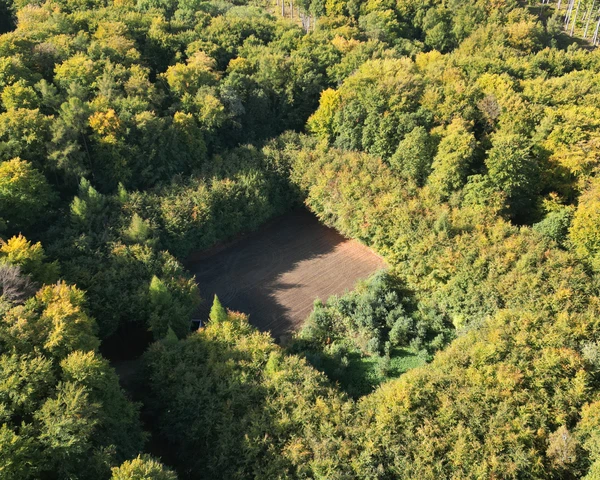
Disposal of Ždánice probes: closing another chapter of mining
At the start of 2023, the decommissioning of three wells in the Ždánice area was successfully completed. This symbolically marked the end of a chapter in the long history of oil and gas extraction in this region. Each well had a different history and significance, but what they had in common was that they had fulfilled their purpose and, upon reaching the end of their life cycle, were professionally and safely secured in a permanent state.
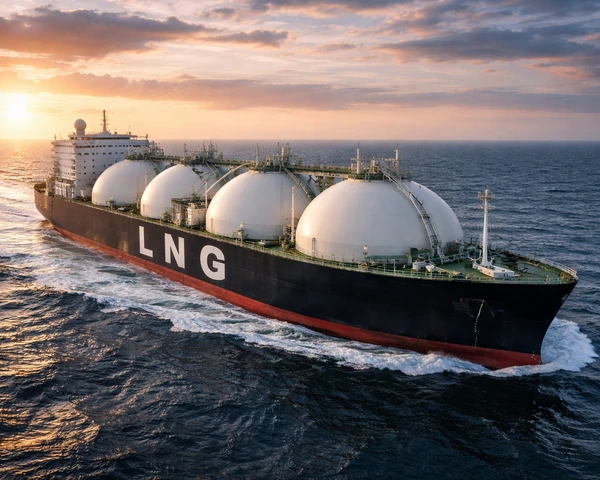
Trading 2025: volatility and new opportunities
The year 2025 proved unfavourable for trading activities. Since the new US administration took office, an unpredictable ‘storm’ of tariffs has raged. The markets were unable to cope with this – and we were no exception. There were sharp fluctuations in energy commodity prices simply on the basis of Donald Trump’s comments on Twitter or in reaction to a newspaper headline, even though the latter contained no new information. A very unfortunate period.
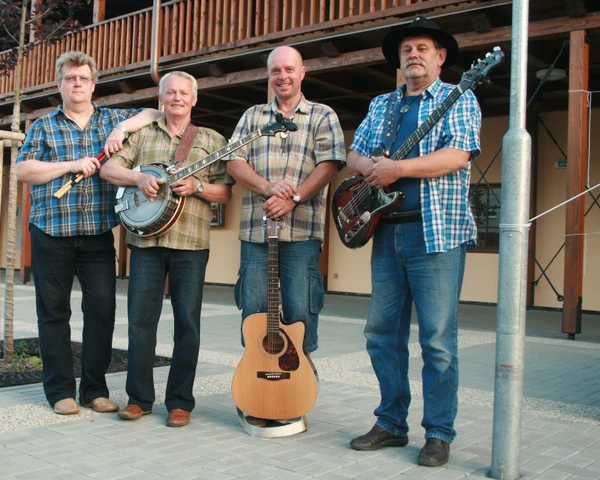
Ruda Jakubík - almost 50 years in MND!
Rudolf Jakubík joined MND by chance in 1977. After his military service, he worked in a bank, where, during a tour, he met the head of the information systems department at the MND in Hodonín among the visitors. One thing led to another, a job offer came along, and even a higher salary. Although the promised computers remained more of a dream for the time being, Ruda took a step that changed his life for the next 49 years.