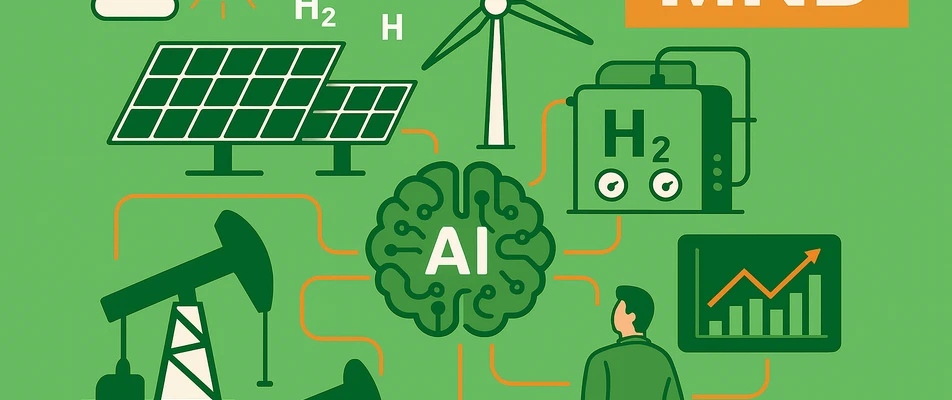
Artificial intelligence is already helping in MND
In recent years, Artificial Intelligence (AI) has become one of the most discussed technological phenomena. For a long time now, it has not only been discussed in the context of science fiction films or scientific research institutes. Thanks to increasingly powerful computing and the availability of data, AI technologies have seen a huge boom in recent months. AI is now making real inroads into all aspects of our lives, from work to healthcare, science, education and entertainment.
The biggest driver of this development today is the private sector, which sees AI as an opportunity to improve its competitiveness. Companies around the world are investing in AI in an effort to streamline internal processes, better understand their data and improve decision-making. Some are upgrading their existing IT systems and replacing them with new ones that already incorporate AI technology. Others are betting on their own innovative capabilities and developing such systems themselves.
In this article, you'll learn that the MND group is no exception. We work with vast amounts of data and information in the course of our business. Whether it's information from the markets, about our customers, information from technologies in operation, geological, economic, accounting and business data, or even weather forecasts. We process all this information on a daily basis to make the right decisions. And because AI technologies excel at processing and analyzing big data, we see one of the biggest opportunities for technological innovation in this area. Typically, these are tasks where we need to predict future developments from available data or look for previously hidden relationships, such as market price predictions or maintenance planning. Surprising results are also being achieved with technologies capable of understanding human speech and images. This can include tasks such as automated document processing or even estimating future customer behaviour based on their verbal expression. However, deploying such technologies in routine use is not easy. These are very complex systems that require expertise across different disciplines and a lot of time to develop and test. The resulting solutions are more like prototypes, tailored to the specific application.
The second major area of application of artificial intelligence lies in so-called generative AI. As the name suggests, this is a technology that is able to generate some content based on a given input, usually verbal. This content can be text, a document, an image, sound, video or even the software code of a computer program. Today, these technologies can greatly assist wherever such content is created. Thanks to them, programmers can save a huge amount of unproductive time and focus only on truly specific tasks. For everyone else, they can help with creating texts, presentations, minutes of meetings and video conferences, or parsing long and complex documents and contracts. These tools are already widely available for business and personal use. The most frequently mentioned services in this context are ChatGPT and Copilot. Due to better integration into the Microsoft software we use on our company computers, and due to the still better designed protection of company information, we at MND are focusing on Copilot. Although its advanced use requires a paid license, some of its features are available to all MND employees. At the end of this article, you will find a guide on how you can start trying and using generative AI for yourself today.
You will also learn what specific AI innovations are being developed by teams in our group and how new technologies are already helping us in our daily activities. The goal of group IT is to connect these teams to each other so that we can take full advantage of group synergies, share experiences, and not get bogged down with problems that someone else has already solved. We also strive to spread awareness of new tools and the opportunities they bring. We encourage employees to use them because we believe that they will make their jobs easier.
AI for MND - we help with the adoption of AI
"This April we launched a group-wide programme called 'AI for MND'. Its aim is to accelerate the adoption and integration of new IT technologies, particularly artificial intelligence, into our daily work. We have assembled a team of employees across the Group with whom we share news, information, interesting webinars and workshops. Above all, we look for practical ways to use AI within the group. Our ambition is to create and foster a community of innovation enthusiasts who will interact with each other, share their experiences and help other employees learn new IT tools.
We are currently focusing on using two generative AI tools - Microsoft Copilot and ChatGPT from OpenAI. We meet with management, work teams, but really anyone who expresses an interest in AI, and together we look for where AI can help them at work. For now, these are the areas we want to focus on:
- translation of texts from Czech into foreign languages and vice versa;
- creation and management of documents - automating the creation of documents, presentations, reports and other company documentation according to predefined templates;
- internal knowledge base - MND Assistant - retrieval of answers from company documents and data (mining database, directives, guidelines, etc.)
- Prediction of well repairs (POS/GOS) based on operational data
- Comparison and selection of job candidates, from candidate sourcing and selection to contract preparation;
- analysis of large and complex documents (legislation, contracts, etc.), automatic creation of summaries, searches, etc.;
Tomáš Kočárek
Digitization and Process Automation Specialist, MND, a. s., Energy Division
MND Energie - AI simplifies communication with customers
High-quality customer service entails, among other things, high demands on the quality of communication with customers. A large amount of information and messages from customers must be processed and responded to on a daily basis. Any optimisation of these processes can then bring speed, improved efficiency and higher customer satisfaction. This is why colleagues at MND Energie are dedicated to this area.
"Prompt processing of customer emails depends on the efficient allocation of the enquiry to the right category and thus to the responsible specialist. Due to the high number of categories and the volume of incoming emails, there is a risk of errors and inconsistent approach. In addition, this is a capacity-intensive process and delays have a negative impact on customer satisfaction. For these reasons, we decided to automate the process.
We used robot technology to 'click' through the app and the decision to place the right category was entrusted to artificial intelligence. These two technologies have been working together for six months to categorize incoming mail twice a day. The project was carried out in cooperation with an external partner, but we now plan to further develop the technologies used internally to ensure the necessary flexibility. We are currently conducting the first internal retraining of the AI model, during which we are evaluating the results to date and identifying opportunities for expansion.
The model, where robotic arms replace human labour and AI takes over simple decision-making, has worked well for us. We are confident that this approach will enable us to automate further processes."
Martin Houška
Solution Architect; MND Energie, a. s.
At MND Energie, AI also helps with the use of corporate data. To a certain extent, this eliminates the need to complexly create new reports for each task. Tasks can now be asked in natural language, and the system selects the necessary data and processes it so that the user gets the expected answer.
"At MND Energy, we have deployed artificial intelligence (AI) to streamline the handling of business data queries in our data warehouse. The AI is connected to the Service Desk that our business users use. As a result, it is no longer always necessary to create detailed reports for each request - often a simple query to the database is all that is needed. AI can convert a query formulated in a common language into computer code, run it in the database and then return a natural language response to the user, along with output in a table format that can be further manipulated.
In order to minimize errors that may occur when generating AI responses, we have introduced a checking mechanism. Each query is first checked by our team to ensure the accuracy of the data. If necessary, we correct the result before sending it to the user. This step not only ensures the quality of the answers, but also helps the AI learn and improve its skills for future queries.
Our main goal is to speed up and simplify the process of getting answers from the data warehouse. By leveraging AI, we are able to reduce the time between asking a query and receiving a response, which increases efficiency and delivers more value to our business users."
Michal Vejborný
Head of Data Management; MND Energie, a. s.
Trading Division - with AI we estimate market price development
The dynamics of financial markets require quick and accurate decisions. Competitive advantage is given to those who can better predict future price movements. The Trading Division therefore relies on state-of-the-art technology and innovative approaches. One of the key pillars of their strategy is the use of artificial intelligence (AI) to analyse market data and create sophisticated trading models.
"Within our Research and Development - Algorithmic Trading department, we specialize in the creation and implementation of automated trading strategies for commodity markets. In creating these models, we rely on the analysis of market data (time series) in order to accurately estimate the direction of future price movements and, based on this, use computer algorithms to execute trades in the market based on predefined parameters such as price, volume and timing.
When analyzing large volumes of data and finding dependencies between variables, we use artificial intelligence (AI) and machine learning models to significantly streamline our processes. AI models play a key role in time series analysis in classification tasks, which classify input data into predefined categories to accurately estimate the direction of price movements. In addition, we use the most advanced neural network-based models to predict market behaviour, which helps us to better identify complex patterns and non-linear dependencies in the data. This approach allows us not only to achieve higher accuracy in our predictions, but also to react more quickly to market dynamics.
We also use AI tools in the actual programming of our trading models in Python. The latest generative models help us to efficiently create trading algorithms and software code and make revisions to them, leading to increased quality, efficiency and sustainability of our software solutions. Last but not least, AI helps us in deploying individual models into production into containerized applications in Kubernetes (a cloud platform), which are, in simple terms, "code packages" with everything needed to run the models - setting up servers, libraries, pipelines, data storage, etc. This approach gives us the flexibility and scalability we need to run them.
We currently have fully automated trading models implemented:
- Carbon/Petro model - for trading of emission allowances and oil financial derivatives based on technical analysis. AI used primarily for grid search of technical strategy hyperparameters - systematically crawling a defined range of parameters and testing their impact on the outcome
- DAID models in France, the Czech Republic and Germany - a model that opens a position in the daily market and closes it a few minutes before the start of contract delivery. Combination of classification and NN (neural network) based models to predict price evolution in the intraday market
- Merit model - Price prediction at the daily auction in Germany. AI also used for grid search of model hyperparameters
- Models for end-customer portfolio variance management and optimization of PV (photovoltaic) and G2P (gas-to-power unit - technology that generates electricity from gas) - NN models for predicting regulating energy"
Jan Starý
Head of Trading Research & Development, MND, a. s., Trading Division
Risk Management - AI as an assistant for risk management
The Risk Management Division within the MND a.s. Group is dedicated to the identification, calculation, modelling and mitigation of risks, especially for the trading (trading) and retail (sales to end customers) part of the company. Their activities mainly focus on market, credit and operational risks, estimating the probabilities and scenarios of them materializing and proposing measures and tools to mitigate and further control them.
"Risks are ubiquitous. It is not for nothing that it is said, hyperbolically, that risk takers are not good gamblers, as they calculate the probabilities of losing instead of finally rolling the dice. The use of AI methods and tools in our department is relatively intensive, taking into account their benefits and potential (how else) risks. We also use classification (classification) and ML methods (machine learning methods), especially those available in the R and Python programming language packages, to model the probabilities of various scenarios and combinations of scenarios. We also use similar methods as alternatives for calculating credit risks, controlling market risk calculations and in some simulations used to value various forward products or derivatives.
We use generative AI tools mainly for code review (checking the quality of the code), debugging (removing its ills), cleaning and simplifying it, and some routine programming and scripting tasks, but also in the context of adding to existing models or benchmarks, against which we also assess their performance. In the case of new methods or procedures for measuring or pricing risk, it has become standard practice to have at least a brief discussion with ChatGPT. In some other cases, we use it to review various types of contracts with, for example, our commercial counterparties or service providers that we consider relevant, particularly where the text is unclear (and lawyers expensive). To a lesser extent, we use MS Copilot to search for downloadable financial statements and other counterparty information. We also occasionally check results against Google Gemini and Claude.ai as part of our audit.
There is no doubt about the general usefulness of all the tools, however, "trust but verify" is not just a general and risky rule, but fits like a "beer with tartar" for their frequent use, even considering that any passive knowledge is always one step behind active knowledge."
Martin Janicko
Head of Risk Management, MND a.s., Trading Division
Try Copilot
Let's try out the Microsoft Copilot AI tool together, which we have available on all company computers. Working with generative AI has its own specifics that you need to understand and learn how to use. When working with AI, queries are entered using text, called prompts. While in the case of Google searches, we type in keywords for the search, with Copilot (and other similar services) we type in continuous text. For example, we can formulate a question: "What is the difference between a Skoda Kodiaq and a BMW X3?" Copilot will find the necessary information on such a prompt and formulate it into a coherent answer. You can then respond to the generated answer, for example, "How does the Skoda Octavia compare to them?" You can also further refine the assignment, e.g. "I am interested in a 2015 BMW X3. What should I look out for?" Prompting in AI is actually very similar to a normal conversation. It's also similar in that the more details you provide in your query, the more precise the answer you get.
However, beware, AI tools are based on constant training on huge amounts of data using machine learning, but also on chats from the users themselves. Microsoft guarantees data security and exclusion from training language models with its Copilot tool once you log in with your corporate account, but be cautious.
Let's do it! Open your browser and type in copilot.microsoft.com. Log in with your work account using the button on the top right. Enter the same information as you would for your computer (by default, "username" and password). Make sure you see the green shield icon in the top right after you log in. If so, the chat is protected and you can ask the AI a question, for example:
- "Explain [specific topic or concept] to me in a simple but detailed way, emphasizing key details and logical connections."
- "Please create a concise and clear summary of the following article with all important details [article attached]."
- "You are an experienced academic mentor and advisor, specializing in research in [field of study]. Your task is to advise me on a project/assignment on [Project/assignment topic]."
- "Translate this article/document into English for me. Keep the context and meaning of the text."
You see, it's not difficult. Have fun with Copilot and don't be afraid to try new prompts. If you have any questions, feel free to contact our Service Desk with your ideas and needs, or email me and I'll be happy to work with you to find a solution.
A word in conclusion
Artificial Intelligence has become an essential part of modern business and its importance is growing all the time. At MND, we are fully aware of the potential that AI offers and are actively working on its use in various areas of our business. From analysing large volumes of data, to predicting future developments, to automating routine tasks - AI is helping us to become more efficient and competitive. Our teams are constantly learning and sharing their expertise to make the most of synergies across the Group. We believe that as AI technologies continue to evolve, we will be able to deliver even more innovative solutions and achieve better results. We look forward to the future that AI will bring.
(This conclusion was automatically generated by Microsoft Copilot using the "Suggest me a conclusion for this article" prompt. And we agree with it 😊 )
Other articles
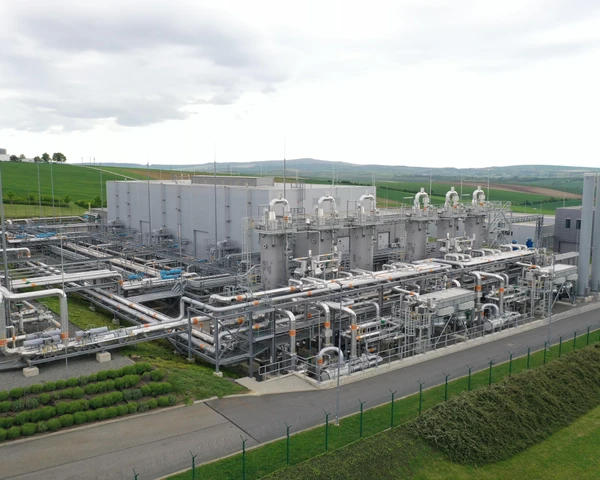
Market and storage capacity impacts of the UA gas transit closure
At the end of 2024, the five-year contract between Russia's Gazprom and Ukraine's Naftogaz for gas transit to Europe expired. Ukraine had previously announced that it was not interested in extending the contract, so the gas flow was stopped as of 1 January 2025.
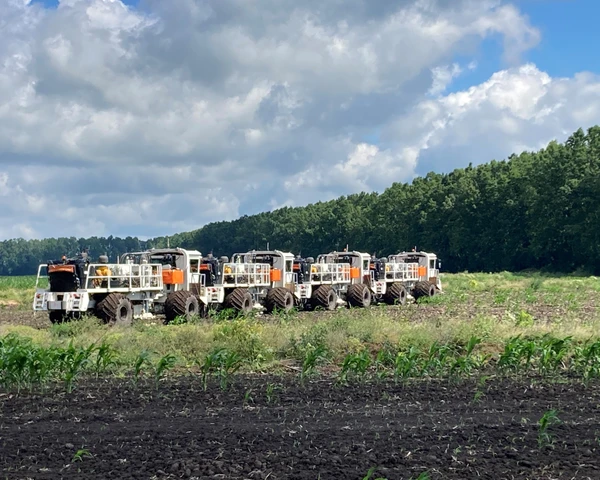
"For the first time, I saw what a Russian missile flyby looks like on seismic footage"
Last year Pavel Kratochvíl participated as a geologist from Hodonín in 3D seismic measurements on the Zukivska licence in the Poltava region in eastern Ukraine. In the interview he describes his experiences from the trip and the specifics of working in the area crossed by missiles.
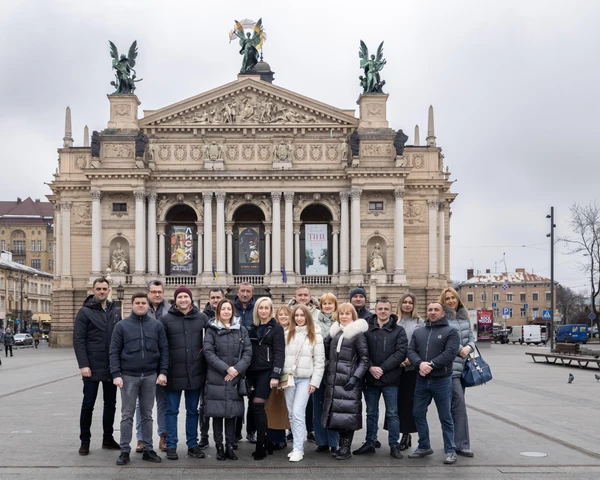
Introduction of MND Ukraine team
MND Ukraine consists of a group of several companies. Today the main company in Ukraine is the company Horyzonty. MND Ukraine owns exploration and production rights from a total of eight licenses covering an aggregate area of almost 400 square kilometres and with a daily production of 500,000 cubic metres. MND's activities are currently managed by 59 colleagues.