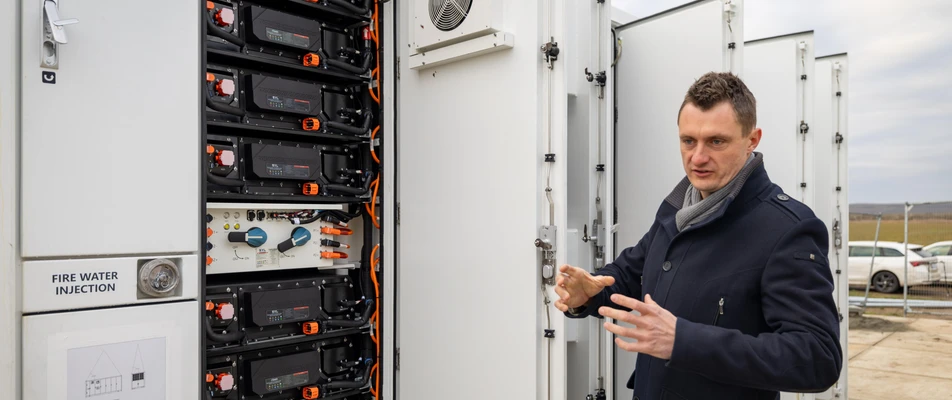
"Batteries are now an opportunity. Whoever builds them fast will seize it."
The MND Group is completing preparations for its first large battery storage facility, BESS Břeclav, with a capacity of 12 MW. When it goes into operation, it will be the largest stand-alone battery project in the Czech Republic and one of the most important milestones in MND's new energy strategy. We spoke with Roman Kroutil, project manager from the New Business Development team, about how the storage facility will work, why now is the ideal time to invest in batteries, and how he got into this field himself.
Romane, in households, it is often said that batteries last for about ten years. How is it with industrial storage?
It depends on the design and how they are operated. The service life is usually expressed in terms of the number of cycles rather than years, with one cycle representing a full charge and full discharge of the battery capacity. In reality, this means that the system measures the energy that flows into and out of the battery, so that, for example, discharging from 100 to 50 and recharging back to 100 per cent is counted as only half a cycle. We have a guarantee from the supplier as to how much energy flow through the battery will cause a certain degree of degradation, and we can plan its use accordingly.
The contractual guarantee of full functionality is set at ten years, but the actual service life of these systems today is around 15 years or more under standard operation. At the same time, according to current legislation, the manufacturer or supplier is obliged to dispose of the equipment in an environmentally friendly manner at the end of its service life.
How demanding is the operation itself?
In order for the operation of battery storage to be profitable without undesirable, and in some cases really high, fees, we must meet the conditions set by the Energy Regulatory Office for the newly created Category I Accumulation. These regulations stipulate that a maximum of 20 per cent of the energy that the storage facility takes from the grid can be consumed for its own operation. In other words, we have to return 80 per cent. Charging and
discharging itself consumes energy, whether it is losses caused by transmission and conversion, powering lighting, securing the premises, control systems and other auxiliary equipment. We also need energy to cool the batteries during high summer temperatures or to temper them during the winter months to ensure the optimal operating temperature of the battery cells. But this is nothing dramatic. If outdoor temperatures do not exceed 35 °C, the system hardly needs to cool at all. Technology has come a long way in this regard, as evidenced by the efficiency of energy storage, which is around 89 per cent when put into operation and does not fall below 84 per cent after ten years – a value that was unthinkable for batteries just a few years ago. However, the basis for success is their well-thought-out operation.
What will MND batteries be used for?
That depends on the development of the energy market. In the coming years, they will primarily be used for power balance services, which we provide to the transmission system operator ČEPS.
After that, trading will play a major role. MND has a very strong background and experience in trading. We are able to buy and sell energy at favourable prices. My colleagues have prepared models for the entire service life of the batteries, which they are constantly improving, which is a huge competitive advantage. I personally started working with batteries in 2019, when I was working for a company involved in measurement and regulation. We had a strong team and came into contact with a manufacturer of large-capacity batteries who wanted us to develop a control system, professionally known as an EMS (energy management system), for their first projects, e.g. for ČEZ and E.ON. The EMS controls the battery, inverter and all other related systems so that they work together, operation is reliable and the user has control over the whole system. That was my first major experience in the battery business.
After joining MND, I first worked with my colleagues on photovoltaics for our centres, but when the battery storage projects got underway, Michal Sasín, Director of NBD (New Business Development), involved me in them. I have a lot of experience in construction management, so it made sense. Today, I am in charge of all Czech projects. We are currently implementing projects in Břeclav, Mušov, Orlová, and Hodonín, and others are in preparation – Blansko, Bruzovice, and Mušov II.
Recently, there has been talk that photovoltaics no longer make complete economic sense under current conditions. What about battery storage?
The photovoltaic market is indeed more saturated, and energy purchase prices are just above their historical minimum, so it is not profitable to build new purely production-oriented photovoltaic facilities at present; mainly those intended to cover own consumption are being built. Batteries, on the other hand, are now a huge opportunity. Due to the ever-increasing saturation of the market with renewable sources, there is great volatility in production and ČEPS must actively balance the grid. Batteries are the ideal tool for this, but the opportunity is time-limited. There are plans to build a large number of battery storage facilities, as evidenced by the number of applications for connection to the distribution network. Those who have them available earlier will achieve greater profitability. The market will gradually become saturated and potential returns will decline.
So why is MND building several smaller storage facilities instead of one giant project?
There are several reasons and contexts for this. The key factor is that, particularly in southern Moravia, we do not have access to grid connections with capacities of tens to hundreds of MWh, but also from a permitting perspective, it is simpler, less demanding across the board, easier to resolve and coordinate. This allows us to build and commission these smaller storage facilities faster than the market becomes completely saturated.
I expect the greatest opportunities to arise around mid-2027, and from this perspective, I believe that MND has chosen the right strategy.
At Mušov, we see the storage facility right next to the photovoltaic plant. Is there any synergy there? Not
in our case. We located the storage facility next to the PV plant mainly because we had enough unused space and grid connections there. Using the battery purely to store energy generated from solar power and shift supply over time does not make economic sense here, so the primary purpose is to operate in Category I Accumulation mode, where the specified conditions even prohibit charging directly from the source. We will therefore charge from the grid and use the battery for market arbitrage and to provide flexibility. The same is true in Orlová, which is also located on the solar power plant premises.
What about safety? People remember burning phones or cars...
Battery storage uses LiFePO technology, which is completely different chemistry than what you find in mobile phones, other home electronics, or most current electric cars. It is an extremely stable technology that does not spontaneously ignite or explode. In addition, we have sophisticated control systems, fire sensors, monitoring and security measures in place at several levels. The risk is therefore minimised.
BESS Břeclav is divided into four separate rows. Why?
Not only Břeclav, but most of our storage facilities are divided in this way. In Hodonín, we even have five units thanks to the chosen design solution, although the total output is lower than in Břeclav. This allows us to certify each row as a separate energy facility. This means that we can provide power balancing services on each unit separately and thus cover a greater number of opportunities on the market. In theory, a situation may arise where one series is charging and the other is discharging – and we get paid for both services (laughs). It is a clever technical solution that increases the flexibility and yield of the project, as well as its stability, and reduces the risk of failure.
What do you enjoy most about working with battery storage?
Large-capacity batteries are incredibly fast and precise devices that combine many different fields. They react within milliseconds. And the whole field is developing very quickly – whether in terms of technology, legislation or the market. It's a dynamic field, and I like it when things are happening. What's more, at MND I have the opportunity to be really "hands-on" with projects, dealing with technology, construction management and coordination with suppliers, while also preparing other projects. I enjoy it.
When will the BESS Břeclav project be completed?
If everything goes according to plan, we will put MND's first major project into permanent operation in early spring 2026. We could put smaller storage facilities at our photovoltaic plants into operation as early as 2026. And other projects are on the way.
| Project | Output/capacity | Expected commissioning |
| BESS Břeclav | 12 MW / 31 MWh | 1 April 2026 |
| BESS Orlová I. | 2 MW / 5 MWh | 1 March 2026 |
| BESS Mušov I. | 2 MW / 5 MWh | 1 March 2026 |
| BESS Hodonín 10 | MW / 25 MWh | 1 June 2026 |
| BESS Mušov II. | 1 MW / 2.5 MWh | 1 October 2026 |
| BESS Bruzovice | 5 MW / 15 MWh | 1 November 2026 |
| BESS Blansko | 10 MW / 25 MWh | 1 December 2026 |

Editor-in-Chief
Other articles
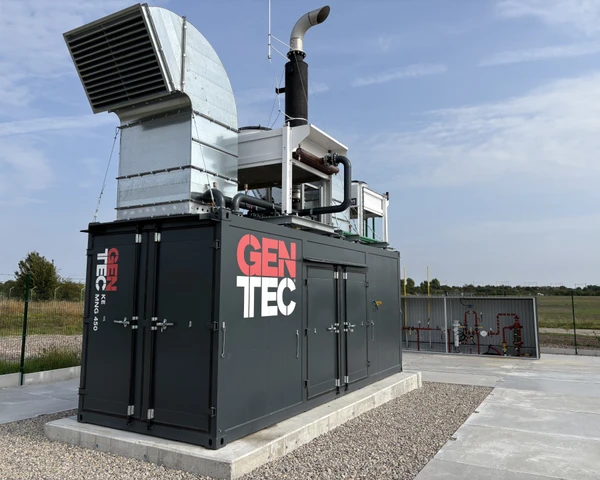
Continuing Gas To Power projects
We are currently working intensively on two new energy projects: we are building both the Hrušky 5 ancillary services facility and the SNaPS Ždánice combined heat and power plant.
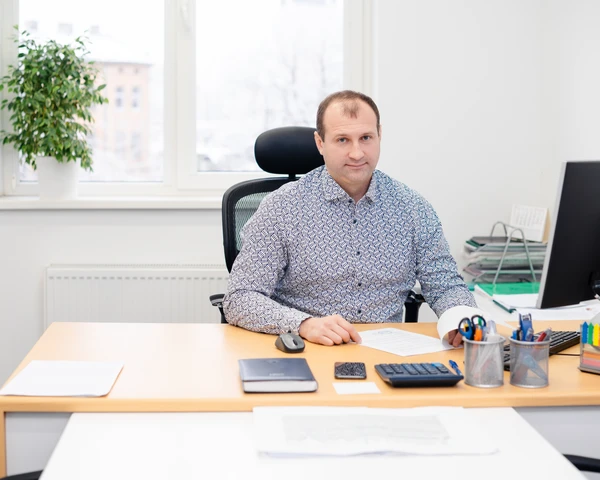
We work even when missiles fly over us, says MND Ukraine's technical chief
The MND Group has been operating in Ukraine for over ten years and, despite the war, it has managed not only to maintain operations but also to gradually develop gas production. However, everyday work takes place in conditions that most of us in Czechia or Germany can hardly imagine. We talked to Volodya Stebletsky, Technical Director of MND Ukraine, about how MND Ukraine works today, what is most difficult and what gives them the strength to continue.
AI in MND: From strategy to practice
AI, artificial intelligence. Two words that have been resonating not only in the world of technology for some time now, but are also increasingly penetrating our everyday working lives. AI is talked about, written about, discussed – but how do we actually use it at MND? And what does it mean for each of us?