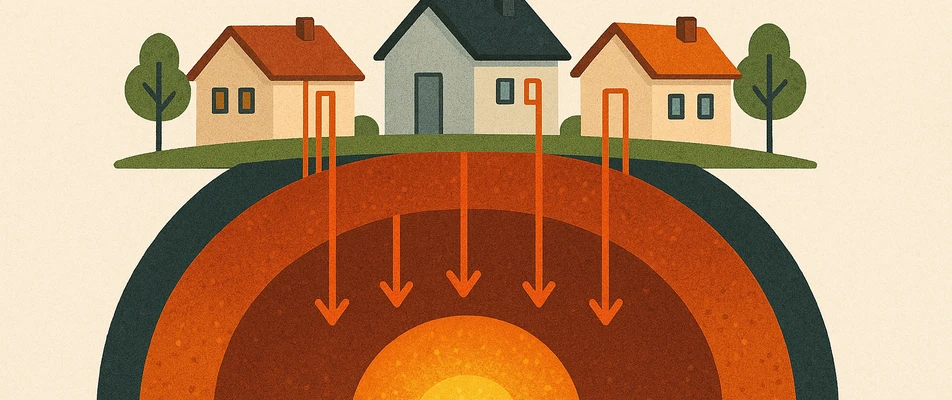
How geothermal energy works
Renewable energy sources have become a key topic in recent years. Everyone is familiar with solar and wind power plants, but there is another source that stands out for its stability, reliability and minimal dependence on weather conditions. However, it is not talked about as much
. Geothermal energy – heat accumulated in the Earth's crust – is one of the most promising types of clean energy, especially at a time when the need for stable, low-emission sources is growing.
Geothermal energy is also the focus of attention due to deep geothermal wells, which MND has been involved in constructing throughout Europe for many years.
Energy that arises on its own
The Earth itself is a huge source of heat. At depths of several kilometres, temperatures reach hundreds of degrees Celsius – and this energy is generated continuously thanks to the radioactive decay of elements in the Earth's crust and the constant flow of heat from the planet's core. Geothermal energy is therefore practically inexhaustible on the timescale of entire human civilisations. All we need to do is find a way to extract it: bring hot water or steam from geological layers to the surface and use it in power stations or heating plants. Modern deep geothermal drilling is often carried out at depths of 3–5 kilometres, where the temperature of the rock reaches over 150 °C. MND utilises its many years of know-how from oil and gas drilling in this field, as the technologies are similar in many ways.
How geothermal energy works, or the closed heat cycle The
principle of geothermal energy is surprisingly simple, although geologically challenging. In its basic form, the system works as follows:
At least two deep boreholes are drilled from the surface – one serves as an injection well, the other as a production well. Cold water is pumped into the injection well, which gradually seeps through the hot rocks underground. There it heats up to a high temperature and rises back to the surface through the production well as hot water or steam.
On the surface, the energy from this hot liquid is used – either directly as a heat source or in a steam turbine to generate electricity. The cooled water then returns underground, where it is reheated. The system thus runs in a closed circuit, emits no emissions and does not pollute the surrounding environment.
In places where the groundwater is naturally hot, a hydrothermal system is used. Where there is no natural water, but the rocks are sufficiently hot, EGS (Enhanced Geothermal Systems) technology can be used to create an artificial heat reservoir – making energy accessible that would otherwise be impossible to obtain.
A stable source – even when the sun isn't shining and the wind isn't blowing
The biggest advantage of geothermal energy is its consistency. While solar panels only produce energy on sunny days and wind turbines only when the wind is blowing, geothermal sources work:
• 24 hours a day
• 365 days a year
• regardless of the season or weather
This makes it a so-called baseload source – one that reliably covers the basic needs of the grid. It is therefore just as valuable to the energy system as conventional power plants, with one major advantage: it does not emit greenhouse gases.
Low emissions and low operating costs
Geothermal operations are among the sources with the lowest CO₂ emissions per kilowatt-hour produced. In modern systems, most of the fluids are returned underground. There are no harmful emissions during operation, the facilities do not spoil the landscape, and they are not noisy. Compared to wind or solar power plants, geothermal energy has the highest energy density – it can generate a large amount of energy from a small area.
Geothermal energy is not only interesting for electricity generation. In many European countries, its importance is also growing for district heating and industrial operations that require a stable source of heat. The advantage is that it is a local source, which reduces dependence on energy imports and increases the region's energy security. This is a great opportunity for MND Drilling and Services, as the company is one of the leading companies capable of carrying out such drilling.
While investments in deep geothermal energy are higher, its operation is very inexpensive. The service life of wells and equipment is typically between 25 and 50 years. Once the system is built, it not only operates at minimal cost, but is also stable and reliable.
Why geothermal energy is more important than ever
Europe is undergoing a fundamental transformation of its energy sector. It is necessary to focus on low-emission sources that are also stable. At the same time, they need to be designed in such a way that they are distributed locally and are not dependent on the geopolitical situation.
Geothermal energy is the answer to these requirements. It is not a fashionable trend, but a strategic resource for the future that can complement other renewable sources and at the same time strengthen Europe's energy stability.

Editor-in-Chief
Other articles
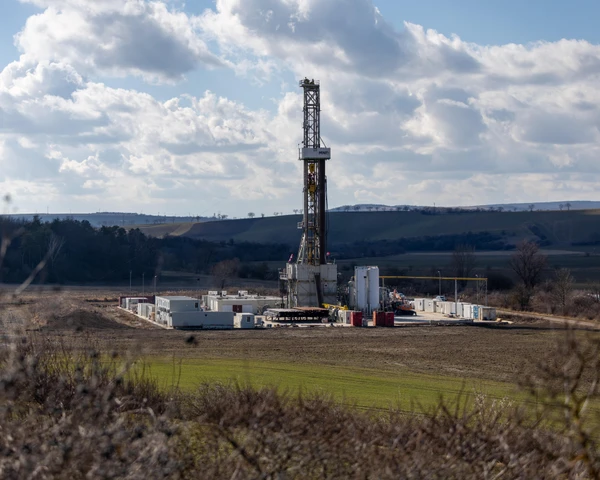
Second well test of Dambořice 9
The last drilling here was in the summer of 2023. While the frogs were croaking then, now, at the end of winter, there are plenty of hares and deer roaming the surrounding fields. And in the evenings, beavers are regularly seen cupitating in the adjacent Burnt Creek.
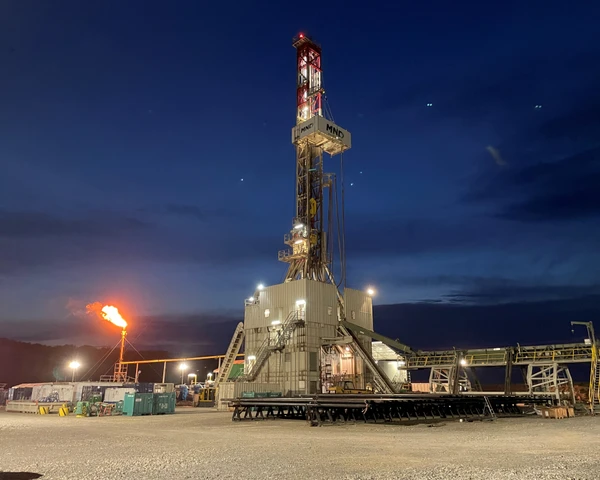
Bentec 450 at the planned dress rehearsal
During the first quarter of 2025, the Bentec 450 is undergoing a five-year inspection. The rig had to interrupt its drilling campaign in Hungary, where it has been operating since last year, to carry out this important part of its regular maintenance. The inspection itself is mainly carried out in Lusatia and partly in Bad Bentheim and Hungary. Once completed, the BT450 is expected to be recommissioned and the project will resume during April.
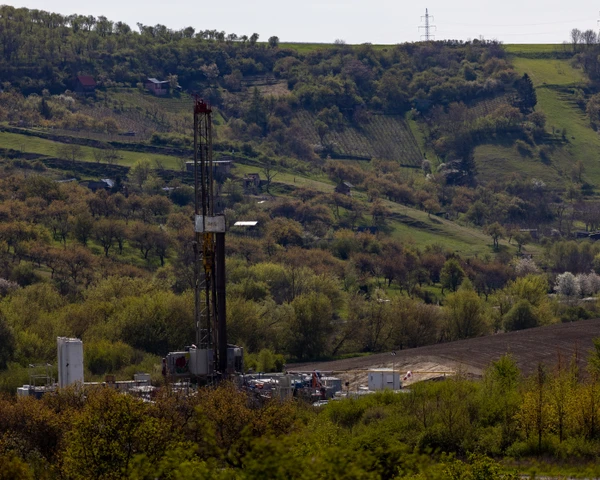
What's in store for Drilling in 2025?
The year 2025 brings many new challenges and projects for our companies MND Drilling & Services and MND Germany, both domestically and abroad. The current strategy is focused on strengthening our position in the industry and achieving ambitious targets for rig and crew utilization in accordance with high HSEQ (Health, Safety, Environment, and Quality) standards.