How a dynamic model created in Hodonin helps to produce more gas in Ukraine
The following lines provide an excellent example of how the cooperation between the Czech and Ukrainian parts of MND works. The bearing engineer Milan Pagáč is creating a dynamic model of the Tynivska deposit, where MND Ukraine is successfully mining and continuously increasing production. At the beginning of June this year it was more than 500 thousand cubic meters per day.
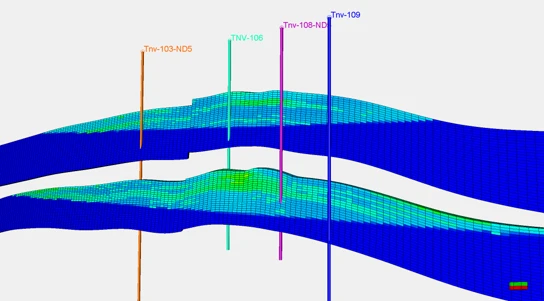
The dynamic model is one of the key tools for the development of the deposit and its further "life" over the coming years. It is a simulation that continuously shows what the deposit looks like so that it can be extracted as efficiently as possible.
It's a bit like weather forecasting: the more data you have and the less you look into the future, the more accurate the prediction. The only difference is that here you are forecasting thirty years ahead.
"It all starts with the geologist giving me interpreted data from 3D seismic, carottage and other sources, plus the results of laboratory analyses of cores and other input parameters," explains Milan Pagáč. Creating a model is a complex and responsible job. The dynamic model should answer a number of important questions: how much should the wells produce to keep them from becoming waterlogged? Is it worth adding more probes? If so, in which part of the deposit? How to adjust production over time to get the most out of the deposit?
These are questions that can be worth up to millions of dollars.
All the data is implemented in one model - first a static model, which is essentially a 3D image of the deposit, and later a dynamic model. The latter changes over time as mining progresses. And it gets progressively more precise as gas properties, water properties, quantities produced, pressures and so on are added - from pumping trials and subsequent production.
In early June, Milan Pagac created a dynamic model of the first two horizons out of eight at Tynivska. It is a very interesting deposit, with large reserves. These two horizons, ND4 and ND5, contain the most gas. Based on the modelling results, we will decide how many more wells to drill and where to place them.
"Here I can see the Tynivska 108 well - the red circles show me the actual daily gas production, the black circles show the static pressures and the yellow circles show the dynamic pressures - that is, what the pressures are at the bottom of the well when it is producing. The solid lines represent the values calculated by the simulator. My job is to adjust the model input parameters so that the calculated values are as close to the actual measured values as possible. Here we have a good match, which is perfect. When I have this data from all the probes that are on the deposit, it gives me a very good picture of what it looks like underground. Then I start making predictions, designs for new wells, and the simulator predicts how the deposit will behave even twenty years ahead. It will show how gas production will go, how pressures will drop, when the probes will water and so on," Milan shows various diagrams.
The simulation will also show an important indication of when the compressors will need to be switched on to draw gas from the wells and push it through to the expedition pipeline. This will allow much more to be extracted from the wells.
And, as Milan says, for horizons where there is gas and water, the dynamic model is much easier to build, the calculations don't take as long. In contrast, it takes weeks to do the simulation work for oil fields. But the outputs from the model then give detailed information on how to dewater the horizons, how many more wells to drill and in which parts, whether to drill horizontal wells, whether to inject water and other procedures to optimise production.

Editor-in-Chief
Other articles
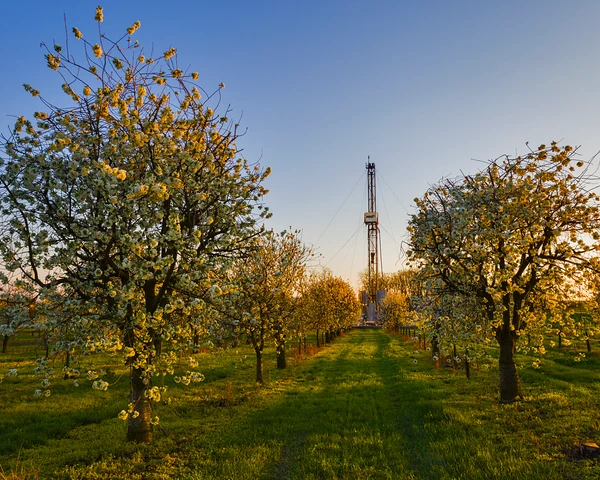
The life cycle of a borehole ends with reclamation. What does it involve?
The drilling and subsequent disposal of the probe is a fascinating process that can be likened to the life cycle from birth to death. Every well, whether exploratory or production, has its own life story. Repot is now bringing you a series that will present interesting reclamations of our specific sites one by one. But in this issue, let's talk in general terms about what such reclamation looks like, why it's done in the first place, and how much it actually costs.
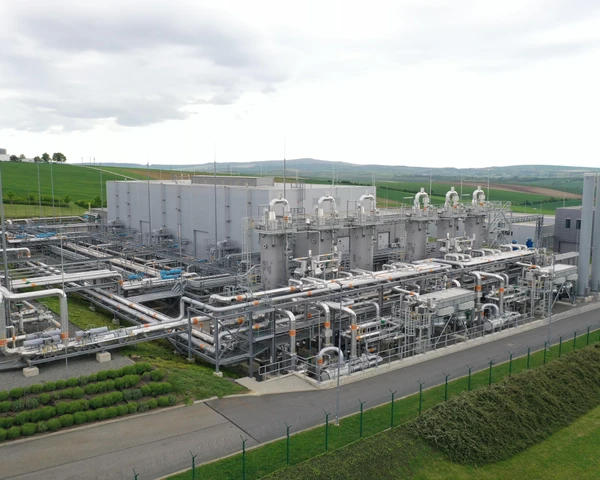
Market and storage capacity impacts of the UA gas transit closure
At the end of 2024, the five-year contract between Russia's Gazprom and Ukraine's Naftogaz for gas transit to Europe expired. Ukraine had previously announced that it was not interested in extending the contract, so the gas flow was stopped as of 1 January 2025.
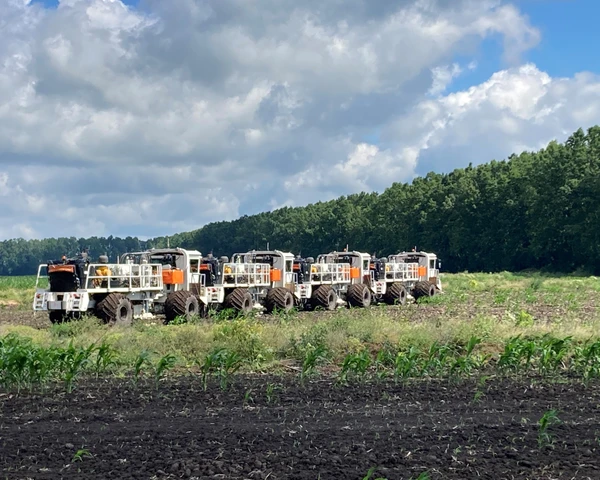
"For the first time, I saw what a Russian missile flyby looks like on seismic footage"
Last year Pavel Kratochvíl participated as a geologist from Hodonín in 3D seismic measurements on the Zukivska licence in the Poltava region in eastern Ukraine. In the interview he describes his experiences from the trip and the specifics of working in the area crossed by missiles.