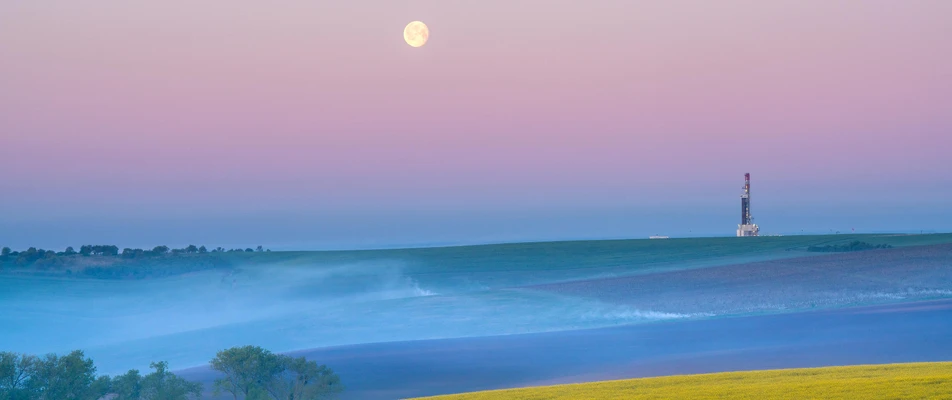
Krumvir 3 - four kilometres underground, potentially huge reserves
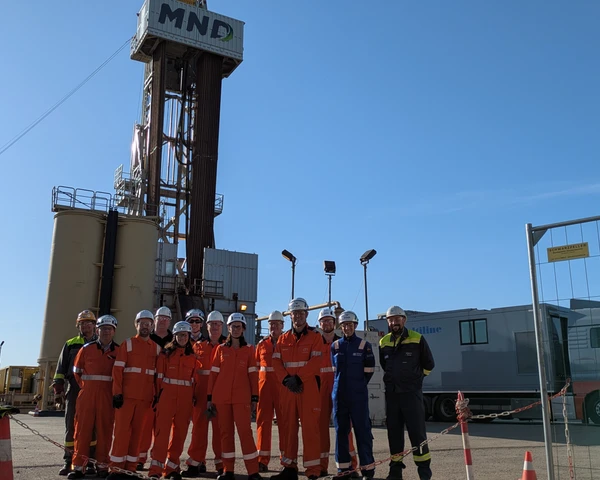
The deepest borehole in the Czech Republic in the last 30 years has received considerable media attention. Representatives of newspapers, TV and radio stations went to the area around Krumvír in South Moravia, where Bentec 350 is working. MND arranged an excursion for them to show their readers, viewers and listeners what it is like to work on a borehole that goes more than four kilometres underground.
The Krumvíř 3 exploration well belongs to the "High risk - high reward" category. High risk, but potentially high reward. Geologists estimate significant natural gas reserves. However, the calculated chance of success is 16 percent. So there is a high probability that it will remain "dry", but at the same time the betting is on a potentially high return if hydrocarbons are found.
"Last year we drilled 10 exploration and appraisal wells in the Czech Republic, Austria and Ukraine and this year we plan to drill 12 wells in these three countries and invest CZK 1.6 billion. We are active in production not only in Moravia, but in the long term we are continuously increasing gas production in western Ukraine in the Girska and Tynivska areas. Last year, we also entered Austria, where we are participating in the production of the Anshof field as part of our newly formed joint venture ADX," says Jana Hamršmídová, CEO of MND Energy and member of the MND Group Board of Directors. "Of course, the development of our activities, not only in conventional mining but also in the introduction of new technologies, is supported by the excellent economic results we have achieved in the last two years," adds Jana Hamršmídová.
Geological research in the Krumvír area began in the 1970s and 1980s, when geophysical surveys and so-called 2D seismic measurements were carried out, followed by more modern 3D seismic measurements in 1990, which were then supplemented by more advanced methods in the following years.

Editor-in-Chief
Other articles
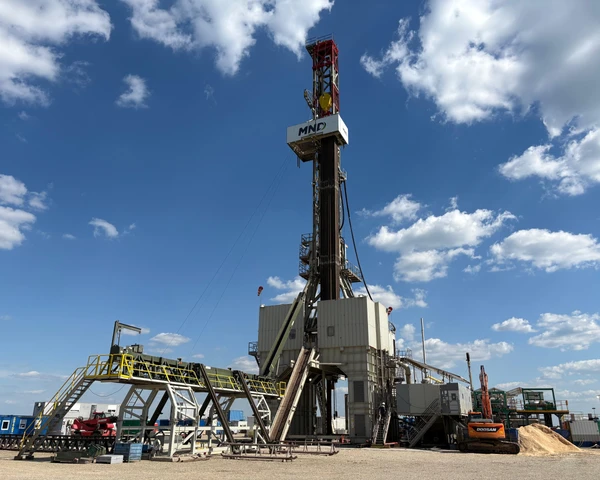
MND drilling rigs conquer Europe
Foreign projects are a strategic pillar for MND Drilling & Services. They bring stable utilization of our rigs, long-term contracts and strengthen our position on the European market. They allow us to invest in upgrading technology, developing people and raising safety standards. And most importantly, we are proving that we can succeed in strong international competition and are among Europe's leading drilling contractors.
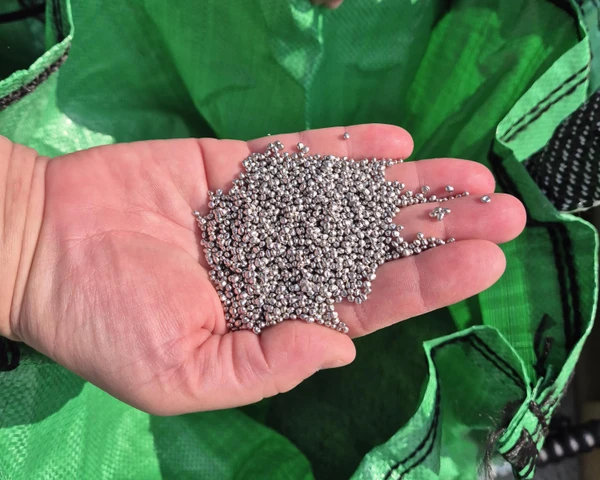
The bismuth plug worked. The unique method will also be used on gas storage facilities
In June, colleagues used a unique method at the Krumvíř 3 well - for the first time in the history of MND, a thermal isolation method using a bismuth-tin alloy was applied. And as it turned out, it not only works, but has the potential to solve a whole range of technical challenges. The first deployment took place in challenging conditions that conventional methods would have found difficult to handle - or even at all.
From rig to management: the success story of Georg Buhrtz and MND's expansion in Germany
MND Germany GmbH has established itself as a respected drilling contractor in the German market over the past few years. Thanks to its emphasis on quality, safety and flexibility, MND Germany has managed to establish a strong position amongst its competitors and is currently successfully completing a one-year drilling campaign for one of the country's largest operators, Harbour Energy, with 40 rigs, building on the activities of the former Wintershall Dea.