How a dynamic model created in Hodonin helps to produce more gas in Ukraine
The following lines provide an excellent example of how the cooperation between the Czech and Ukrainian parts of MND works. The bearing engineer Milan Pagáč is creating a dynamic model of the Tynivska deposit, where MND Ukraine is successfully mining and continuously increasing production. At the beginning of June this year it was more than 500 thousand cubic meters per day.
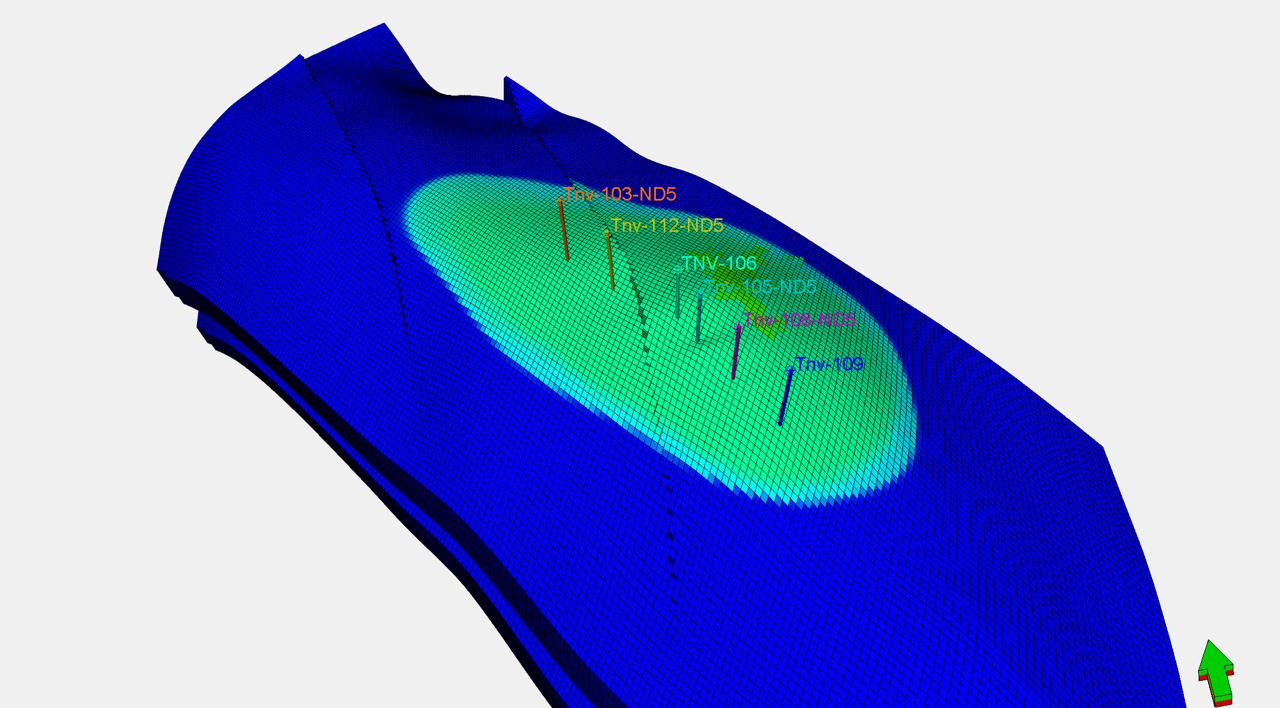
The dynamic model is one of the key tools for the development of the deposit and its further "life" over the coming years. It is a simulation that continuously shows what the deposit looks like so that it can be extracted as efficiently as possible.
It's a bit like weather forecasting: the more data you have and the less you look into the future, the more accurate the prediction. The only difference is that here you are forecasting thirty years ahead.
"It all starts with the geologist giving me interpreted data from 3D seismic, carottage and other sources, plus the results of laboratory analyses of cores and other input parameters," explains Milan Pagáč. Creating a model is a complex and responsible job. The dynamic model should answer a number of important questions: how much should the wells produce to keep them from becoming waterlogged? Is it worth adding more probes? If so, in which part of the deposit? How to adjust production over time to get the most out of the deposit?
These are questions that can be worth up to millions of dollars.
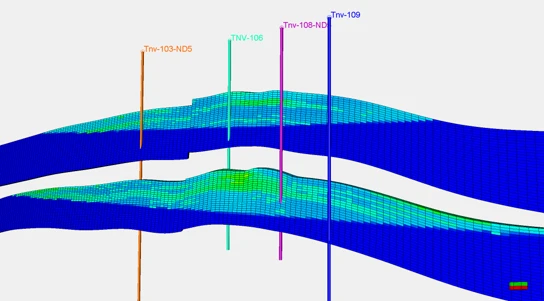
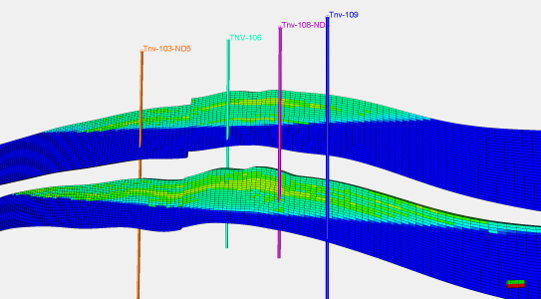
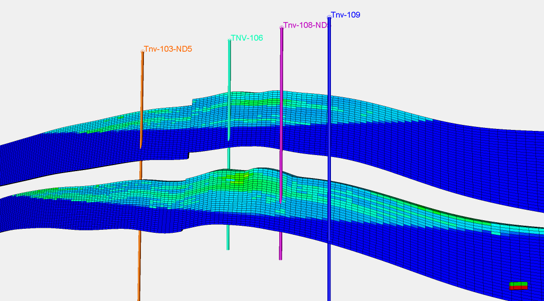
All the data is implemented in one model - first a static model, which is essentially a 3D image of the deposit, and later a dynamic model. The latter changes over time as mining progresses. And it gets progressively more precise as gas properties, water properties, quantities produced, pressures and so on are added - from pumping trials and subsequent production.
In early June, Milan Pagac created a dynamic model of the first two horizons out of eight at Tynivska. It is a very interesting deposit, with large reserves. These two horizons, ND4 and ND5, contain the most gas. Based on the modelling results, we will decide how many more wells to drill and where to place them.
"Here I can see the Tynivska 108 well - the red circles show me the actual daily gas production, the black circles show the static pressures and the yellow circles show the dynamic pressures - that is, what the pressures are at the bottom of the well when it is producing. The solid lines represent the values calculated by the simulator. My job is to adjust the model input parameters so that the calculated values are as close to the actual measured values as possible. Here we have a good match, which is perfect. When I have this data from all the probes that are on the deposit, it gives me a very good picture of what it looks like underground. Then I start making predictions, designs for new wells, and the simulator predicts how the deposit will behave even twenty years ahead. It will show how gas production will go, how pressures will drop, when the probes will water and so on," Milan shows various diagrams.
The simulation will also show an important indication of when the compressors will need to be switched on to draw gas from the wells and push it through to the expedition pipeline. This will allow much more to be extracted from the wells.
And, as Milan says, for horizons where there is gas and water, the dynamic model is much easier to build, the calculations don't take as long. In contrast, it takes weeks to do the simulation work for oil fields. But the outputs from the model then give detailed information on how to dewater the horizons, how many more wells to drill and in which parts, whether to drill horizontal wells, whether to inject water and other procedures to optimise production.

Editor-in-Chief
Other articles
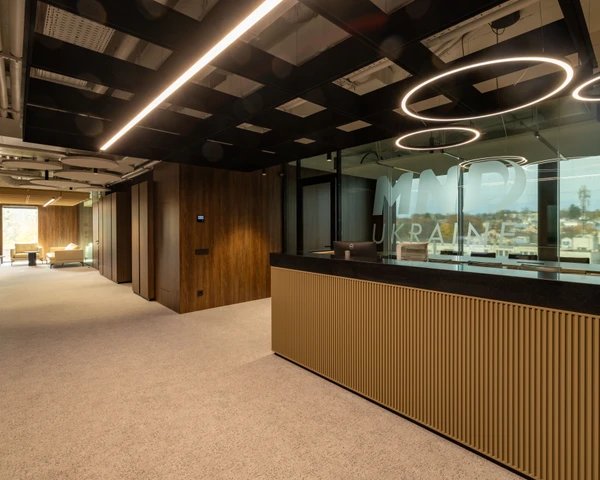
MND opens new offices in Lviv
More space, more light and room for growth. On 18 November this year, MND Ukraine officially opened its new modern offices in Lviv. The spacious, wood-panelled and airy premises offer employees significantly better working conditions and a representative setting for meetings. The new headquarters in the very centre of the city also allows for further planned growth of the team.
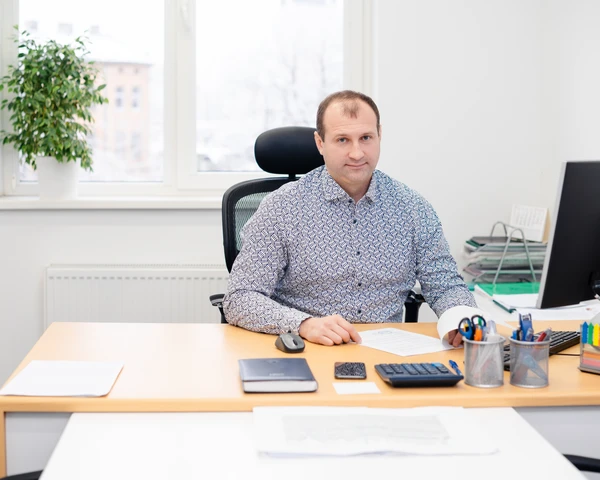
We work even when missiles fly over us, says MND Ukraine's technical chief
The MND Group has been operating in Ukraine for over ten years and, despite the war, it has managed not only to maintain operations but also to gradually develop gas production. However, everyday work takes place in conditions that most of us in Czechia or Germany can hardly imagine. We talked to Volodya Stebletsky, Technical Director of MND Ukraine, about how MND Ukraine works today, what is most difficult and what gives them the strength to continue.
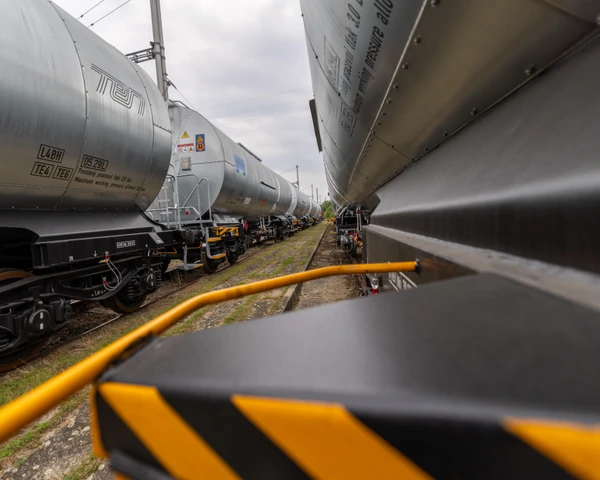
Oil on the rails
Four times more crude oil than before is sent by MND from the Lusatian railway station to Kralupy nad Vltavou these weeks. The reason for this is the termination of transport via the Druzhba pipeline. All the crude oil produced must be transported by tanker - first by truck, then by rail.