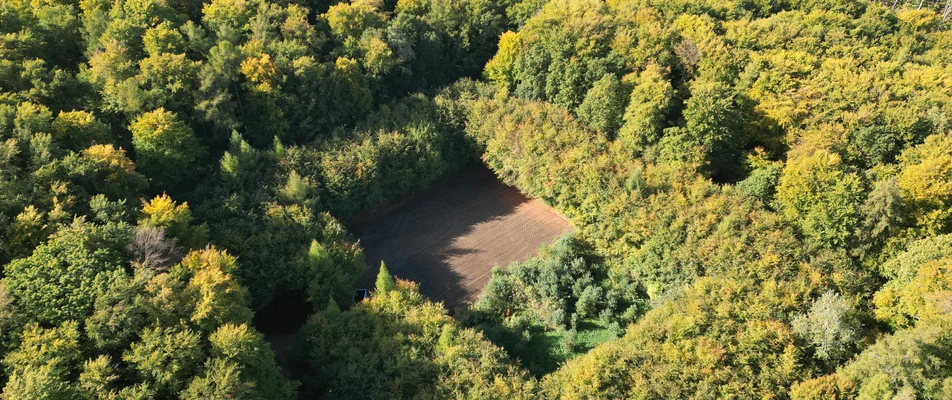
Disposal of Ždánice probes: closing another chapter of mining
At the start of 2023, the decommissioning of three wells in the Ždánice area was successfully completed. This symbolically marked the end of a chapter in the long history of oil and gas extraction in this region. Each well had a different history and significance, but what they had in common was that they had fulfilled their purpose and, upon reaching the end of their life cycle, were professionally and safely secured in a permanent state.
History of individual wells
Ždánice 70
The well was completed in 1987. Active production continued here until 2015, when it was classified as depleted and subsequently scheduled for decommissioning. During its operational life, it produced 1,345 m³ of crude oil and 3,898.1 thousand m³ of natural gas.
Ždánice 71
Also completed in 1987, but never brought into production. Throughout its existence, it served as an observation well for monitoring the reservoir and surrounding geological structures.
Ždánice 112
This well was completed in 1987 and remained in active production until 2005. During its operational life, it produced 1,160 m³ of crude oil and 123,800 m³ of natural gas. Following the cessation of production, it was also placed on the list of wells designated for decommissioning.
Decommissioning involved securing the wells, sealing the boreholes and restoring the site to a condition that allows for its further use or return to its original state.
The conclusion of a significant phase
The completion of this work marks the end of a nearly forty-year period of production in this part of Ždánice. The region, which for many years contributed to the extraction of oil and natural gas, is thus entering a new phase focused on reclamation and the safe subsequent management and use of the land.
Internal and External Communications Manager
Other articles
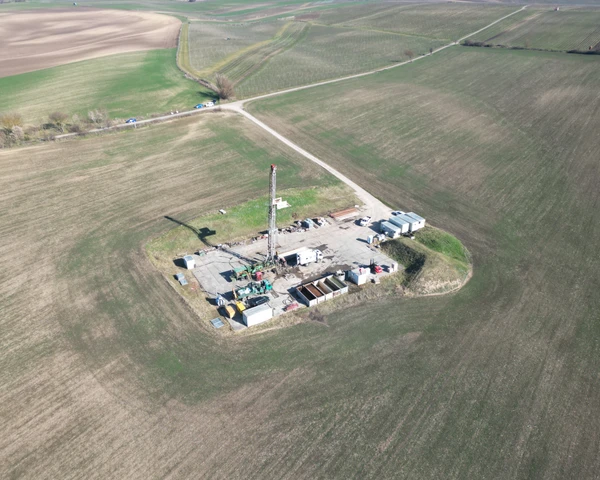
Disposal of probes in Prušánky
In March 2025, the abandonment of three production wells in the Prušánky area was successfully completed - specifically wells Prušánky 4b, 6 and 8. Together, these probes opened and produced the Labe horizon in the Middle Baden on the subsiding crust of the Schrattenberg fault system.

For the first time, we have published a sustainability report. Why is it important?
It has been impossible to escape the topic of ESG in recent years. We have written about it several times in our magazine and spoken to many of you. In May this year, we put theory into practice and published the first consolidated sustainability report for the MND Group under the new European rules. This is not just a task or an obligation. Above all, it is clearly compiled data on how our Group operates from a different perspective - ecological, human and process. In this article, you will briefly learn what we reported, what we found out about the Group as a result and what the sustainability report means in practice.
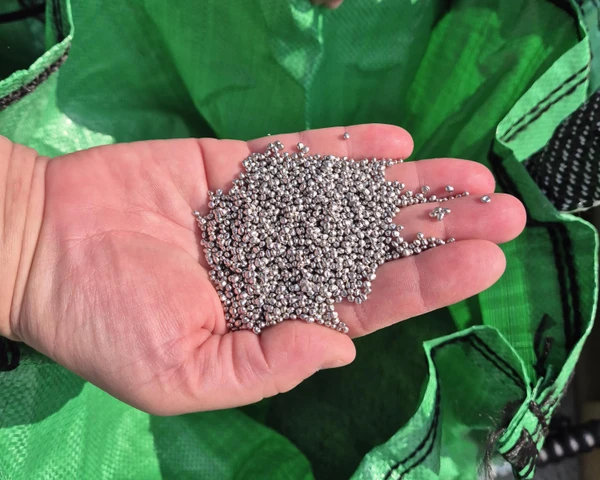
The bismuth plug worked. The unique method will also be used on gas storage facilities
In June, colleagues used a unique method at the Krumvíř 3 well - for the first time in the history of MND, a thermal isolation method using a bismuth-tin alloy was applied. And as it turned out, it not only works, but has the potential to solve a whole range of technical challenges. The first deployment took place in challenging conditions that conventional methods would have found difficult to handle - or even at all.