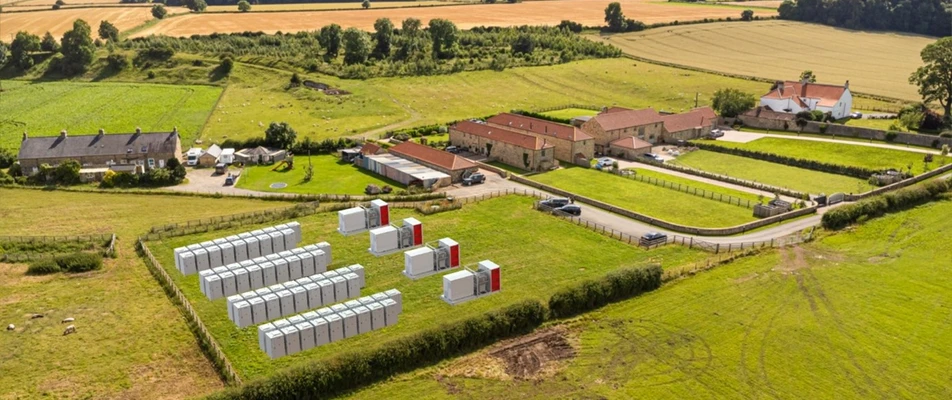
MND is heading into the battery business. What will the BESS projects bring?
MND is preparing the largest investment of 2025 - a 12 MW battery storage facility in Breclav with a capacity of over 30 MWh. This project is our entry into an area that is fundamentally changing the energy industry. Battery storage provides grid stability, commercial flexibility and contributes to the transition to a more sustainable energy mix with a higher share of renewables. New legislation and falling battery prices are opening up new opportunities in the Czech Republic. MND wants to develop projects not only in our country but also in the more advanced markets in Germany. Battery flexibility will play a key role in balancing demand, managing price fluctuations and supporting the decarbonisation of the energy sector. We are starting with Breclav, with more projects to follow.
Alongside gas-fired power plants, battery storage is an essential element of modern energy and a source of much-needed flexibility to help the transition from coal-fired power plants to an energy mix with a greater share of renewables. In Europe, installed battery storage capacity has doubled in the last two years, approaching 20 GWh. By 2030, it is expected to increase to 120 GW to meet climate targets.
While the market for large-scale battery storage is well underway in Germany, Italy, the Netherlands or the UK, which account for a substantial share of the 20 GWh, the Czech Republic is only now, after seven years of preparation, finalising the necessary legislation and regulatory conditions to allow batteries to be connected and operated without restrictions. So far, up to 100 MW of batteries have been connected in this country, the vast majority of which have been connected as part of a generation source, i.e. a conventional power plant, a heating plant, a gas source, etc. The investments have been made mainly by the operators of these sources.
The new legislation is intended to allow a separate battery to be connected directly to the grid as a separate licensed electricity storage activity. This opens up space for other investors. Battery prices have fallen by almost half in recent years, but to have a positive business model you need to be able to take advantage of the full range of opportunities on the energy markets.
Since 2021, the Czech Republic has had a market for grid balancing support services organised by the transmission system operator CEPS (Czech Electricity Transmission System), which is responsible for the stability of the entire power system. Batteries can participate in daily auctions and provide their power very quickly in both directions, i.e. charging from surplus electricity or supplying the missing electricity depending on the balance between production and consumption. Batteries get paid for their readiness and for the actual electricity delivered during the CEPS activation commands.
In addition, it is possible to trade on the short-term electricity markets up to the level of individual hours, or 15-minute intervals, to which the power sector has switched since July this year. Due to the growth in renewables and the future shift away from coal, we can expect more price volatility during the day, including extremes where prices fall into negative territory or, conversely, exceed ten times the average price. The battery allows the difference between prices during the day to be exploited, i.e. cheap to charge and expensive to discharge. This is called spot arbitrage. It may sound like speculation, but this again helps to balance surpluses, e.g. due to solar generation, and shortages in the grid in the morning and evening through price signals.
Last but not least, the battery can serve as a tool for balancing deviations between expected production or consumption and reality. Deviation prices increase with increasing demand and with the cost of balancing the grid as consumption increases.
MND prepares first project in Breclav
MND Trading has experience in these markets and uses advanced algorithms which it is further refining. In addition, it is also preparing for a role as a flexibility aggregator to trade ancillary services. This includes both batteries and the recently completed 2.6 MW Gas to Power gas-fired power plant in Borkovany.
MND has therefore decided to venture into the large battery storage business as well. The first project in Breclav, with a capacity of 12 MW and over 30 MWh, is being prepared for installation and should be completed by the end of 2025. Further projects will follow and in parallel, battery opportunities are also being developed in Germany. There, the market is a little further ahead in this respect and the regulatory conditions are very favourable for batteries. Here, batteries have all grid usage charges waived for 20 years, which corresponds to their expected lifetime. However, the approval processes are more demanding and there is a lot of competition from investors in the market. Nevertheless, the first sites are already emerging where we are at an advanced stage of approving batteries of a similar size to those in Breclav.
So we know how to trade flexibility and Trading is looking forward to having the new "toy" available.
Batteries for our photovoltaics as well
In addition to the BESS (Battery Energy Storage System) Břeclav, we are still looking for other opportunities for the implementation of battery storage facilities, including a smaller BESS for our PV plants Orlová I and Mušov I. In both cases, these are storage facilities with parameters of 2 MW of power and 5 MWh of capacity, for which, after the evaluation of the tender, in which we have fully used the findings from Břeclav, we are preparing the contractual documents so that we can start the preparatory stages of implementation by the end of this year.
Based on the technical solution options received, colleagues from MND Trading are working on mathematical calculation models for another storage facility, this time within the planned construction of the Mušov II PV plant.
We have also managed to conclude a contract for connection to the Hodonín substation EG.D in the area of Pánovo. Therefore, a tender for a 10 MW battery storage facility with a capacity of 25 MWh is currently underway, the evaluation of which is planned by the end of this year, and after subsequent completion and finalization of the contractual documents, the contract could be signed at the beginning of 2025.
If all goes well in the case of Breclav, MND's first large-scale BESS project should be in permanent operation by January 2026. For the smaller battery storage facilities at our PV plants, we could have these processes, which are somewhat simpler, in place by the end of the third quarter of 2025.
František Vašek
senior strategy advisor
Roman Kroutil
Project Manager
Other articles
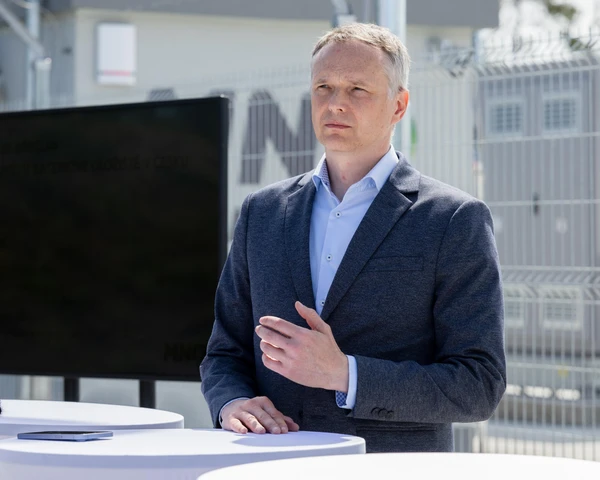
Both the state and customers will benefit from battery storage, says Martin Pich
Battery storage is rapidly becoming a key component of the modern energy sector. It is not just about the technology, but also a new way of generating revenue from flexibility whilst stabilising the grid. Martin Pich, Director of the Trading Division at MND, explains exactly how this business works in practice.
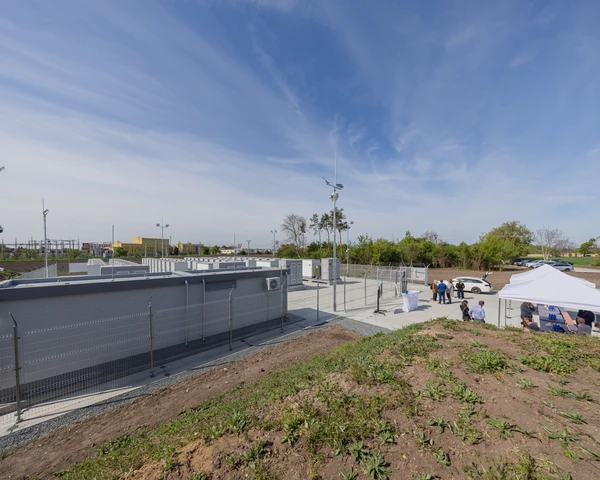
MND is entering the battery energy sector
MND is expanding its activities into a new energy sector – and doing so in grand style. In Břeclav, it has commissioned a 31 MWh battery storage facility, which is currently the largest stand-alone facility of its kind in the Czech Republic. The project, costing around a quarter of a billion crowns, is intended to help stabilise the electricity grid and further develop the electricity trading market.
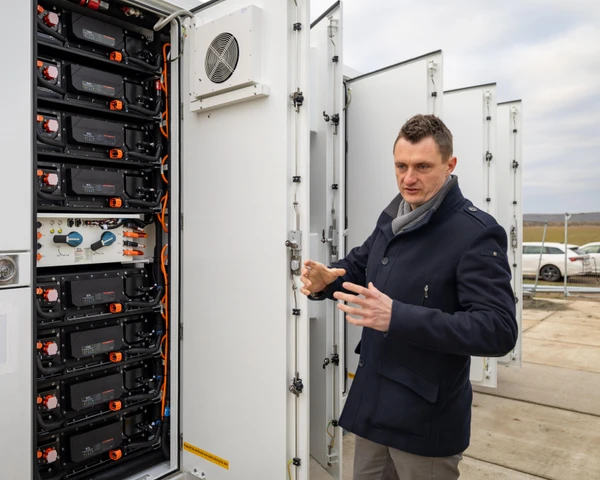
"Batteries are now an opportunity. Whoever builds them fast will seize it."
The MND Group is completing preparations for its first large battery storage facility, BESS Břeclav, with a capacity of 12 MW. When it goes into operation, it will be the largest stand-alone battery project in the Czech Republic and one of the most important milestones in MND's new energy strategy. We spoke with Roman Kroutil, project manager from the New Business Development team, about how the storage facility will work, why now is the ideal time to invest in batteries, and how he got into this field himself.