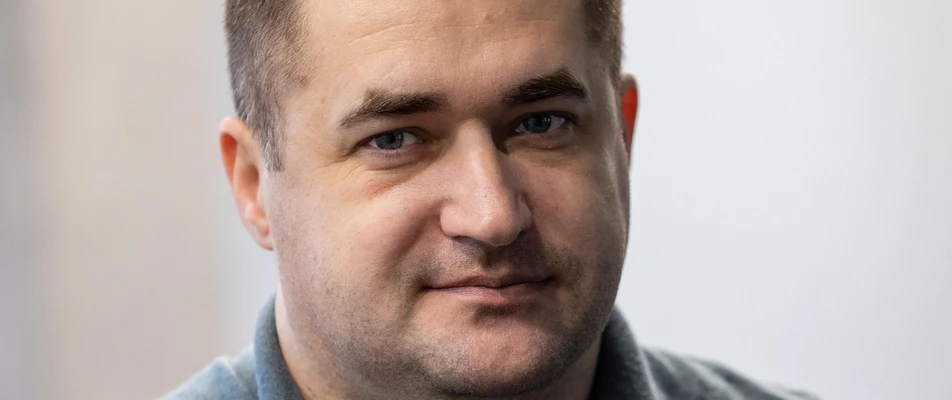
He believed in Tynivskaya's success, now Volodya Radelytskyi has the same feeling about Zhukyvskaya
Geology is often about experience and intuition in interpreting data. 3D seismic measurements may produce hard data, but they can reveal a lot, and the human factor still plays a significant role. Volodya Radelytskyi knows the underground structures of western Ukraine very well. It was he who strongly recommended that MND buy the Tynivskaya licence. The swampy area at first sight did not have such potential.
You said in the Report in the autumn of 2023 that the Tynivská licence would be as good as the Girská licence. At the time, I got more of a reaction that maybe that was too optimistic. However, your words were confirmed and the reality is even better. How did you know that then?
It was a kind of geological intuition. We had the data and I just saw it there, given my experience in the region.
At that time, the expected reserves were around two billion cubic meters of gas. Is that still the case?
It does, we have two billion reserves there that we plan to open up and produce. But it is possible that there will be more gas eventually. We're working in the 760 to 1,180 metre horizon now, and there's still potential in the 1,200 metre horizon.
When we talked at the time, you said that Tynivskaya was 70% covered by 3D seismic. Will the other 30 percent be measured?
Yes, there's still about 30 square kilometres to go. The old data shows that there is potential there, but we will need to measure it with 3D seismic, of course. We are planning to do that by the end of this year or early 2026.
We have also acquired an extension of the Pivdeno-Girska license, which is an extension of our original Girska license. When will work start there?
We plan to drill the first well there this year. We'll see what the results are. Two more wells will follow immediately afterwards.
So the 3D seismic is complete there?
Yes, when we took the measurements at Girska, we also got data from the neighbouring areas, so we knew exactly what we were getting into. We had precise information on how the field was developing, so we applied for a licence based on that.
When you look at the Zhukyska data now, what does your geological intuition say?
My intuition says there's very good potential there. It's a little bit harder to judge because so far we've been in the west of Ukraine in the Lviv region, which we're pretty familiar with, we know what to expect here. In Tynivska, we have built on our experience in Girska. Zhukivska is in the east, it's a completely different geological environment. It will be a completely new experience for us. However, we did 3D seismic last year and it's clear that the potential is there.
How do you think Zhukyvskaya differs from our current deposits?
The structural conditions are completely different. In the west of Ukraine, we are targeting targets at 500 to 2,000 metres. In the Poltava and Kharkiv regions, the prospective horizons range from four to six kilometres. Wells there typically produce 200 to 500 thousand cubic metres of gas per day.
I thought 3D seismic didn't even go that deep, it has a range of five kilometres.
It goes deeper, but it has to be done over a very large area because the waves propagate at a certain angle. So if you want to measure at six kilometres, you have to measure over a much larger area. And we have a limited study area because of our licence. So we only have data from the deepest structures in part of the area.
What's the timetable there? Will they start drilling there soon?
We're scheduled to drill there later this year. It will be shallower, about 2,300 metres, followed by one over four kilometres, but it doesn't have an exact date yet.
Interview conducted by Martin Beneš
Other articles
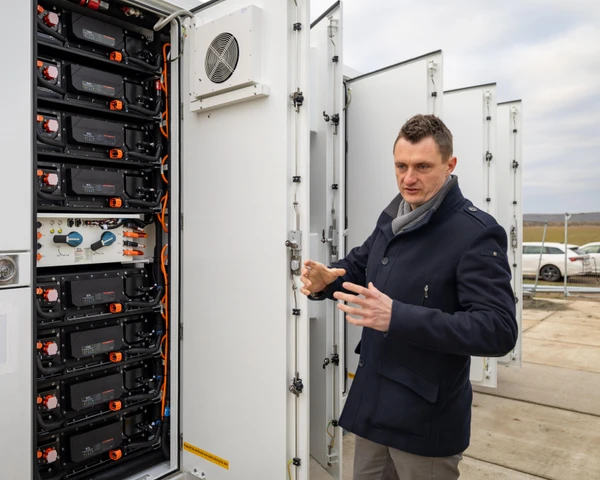
"Batteries are now an opportunity. Whoever builds them fast will seize it."
The MND Group is completing preparations for its first large battery storage facility, BESS Břeclav, with a capacity of 12 MW. When it goes into operation, it will be the largest stand-alone battery project in the Czech Republic and one of the most important milestones in MND's new energy strategy. We spoke with Roman Kroutil, project manager from the New Business Development team, about how the storage facility will work, why now is the ideal time to invest in batteries, and how he got into this field himself.
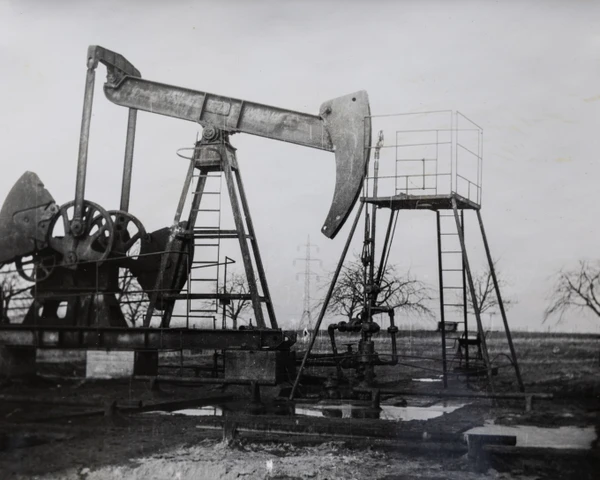
Oil production at the Lanžhot field ends after 70 years
The site is awaiting reclamation and restoration to nature. After almost seven decades, mining at the Lanžhot deposit, the southernmost oil deposit in the Czech Republic, is coming to an end. In a remote forest area at the confluence of the Dyje and Kyjovka rivers, in a location that is located in a protected zone and whose administration is becoming increasingly demanding from a legislative point of view, only a few wells remain today. These will be gradually closed in the coming years and the entire area will be prepared for reclamation.
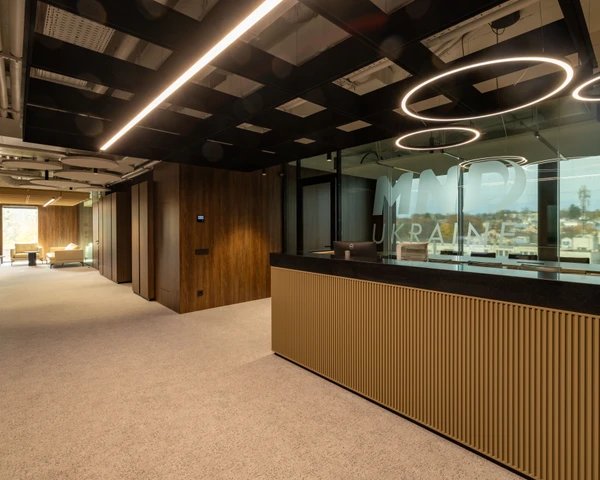
MND opens new offices in Lviv
More space, more light and room for growth. On 18 November this year, MND Ukraine officially opened its new modern offices in Lviv. The spacious, wood-panelled and airy premises offer employees significantly better working conditions and a representative setting for meetings. The new headquarters in the very centre of the city also allows for further planned growth of the team.