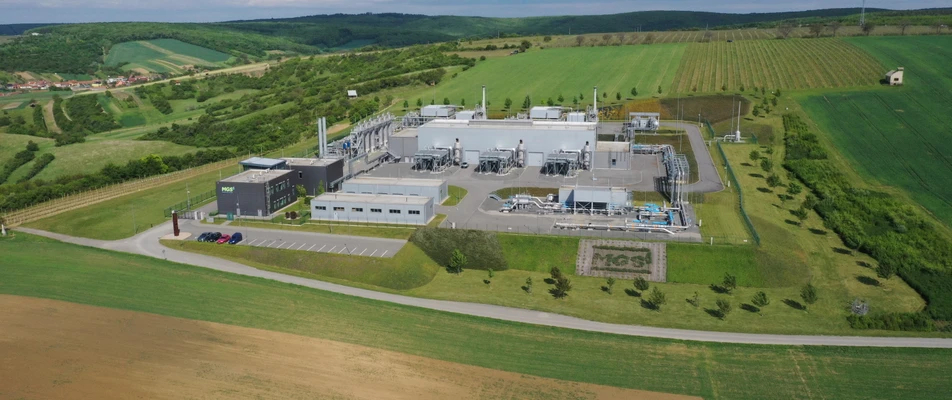
Gas storage tanks and their importance
Underground gas storage facilities (UGS) are a strategic pillar of the modern energy system. In times of growing energy consumption, fluctuating price levels and geopolitical uncertainties, UGS facilities are becoming an indispensable tool for ensuring the reliability, flexibility and competitiveness of the gas sector.
PZP are de facto underground geological structures that enable the temporary storage of natural gas. We most often distinguish between three basic types of storage facilities:
-
deposits – depleted gas or oil deposits
-
aquifers – porous rocks flooded with water
-
caverns – artificially created cavities, especially in salt deposits
The technical parameters are key for each storage facility. They determine how efficiently gas can be stored and subsequently used. The most important parameters include the operating volume, i.e. the amount of gas that can be stored in the storage facility, and the injection and withdrawal rates, i.e. how much gas can be transported to or withdrawn from the storage facility per day. Other factors affecting the performance of a storage facility include operating pressures, the number and quality of probes, and above-ground technology.
PZP has been part of the Czech gas industry for several decades. They began to be built for several reasons. The primary purpose was to optimise the use of the gas system by balancing seasonal fluctuations in consumption. Gas supplies are more or less stable throughout the year, while consumption fluctuates significantly. In summer, when gas consumption is lower, the storage facilities are usually filled, and when demand increases during winter, they are emptied.
However, the purpose of SGI has gradually changed over the last two decades, and market liberalisation has brought new trading opportunities. SGI allow traders to buy gas when prices are lower, usually in summer, store it and sell it when demand is higher. This helps to stabilise gas prices on the market. If the market depended solely on current supplies, any outage would lead to an immediate price increase. Thanks to PZP, missing volumes can be quickly replenished.
The construction of PZP has also strengthened energy security and independence. Today, PZP are considered one of the key tools of energy security. They serve as a safeguard in the event of a gas supply disruption, for example due to technical problems, infrastructure accidents or geopolitical conflicts. In crisis situations, storage facilities allow gas to be released into the network immediately, ensuring continuity of supply to households, industry and critical infrastructure such as hospitals and heating plants.
In 2022, following Russia's invasion of Ukraine, when Gazprom completely stopped using its storage capacities in Europe and significantly reduced gas supplies, the role of underground gas storage facilities as a crisis management and market stabilisation tool was clearly confirmed. It became clear how essential it is to have a gas storage infrastructure in place that allows for the immediate release of reserves into the network.
In addition to underground gas storage, gas transmission infrastructure is also important. In terms of security and reliability of supply, pipelines have one key advantage over LNG – the destination is fixed. Gas flowing through pipelines has a clearly defined direction and destination country, which ensures stability of supply. In contrast, LNG is a globally traded commodity, and ships carrying cargo can change direction according to the current market situation, where price is the decisive factor. At times of high demand or price volatility, supplies can be redirected elsewhere, even at the last minute, which significantly increases uncertainty for customers. For this reason, the combination of PZP, stable pipelines and supplementary LNG supplies forms an ideal system that allows for a flexible response to the challenges of the current energy market.
Situation in the Czech Republic
The Czech Republic has a total of nine underground gas storage facilities with a total capacity of approximately 45 TWh, which are capable of covering more than half of the country's annual gas consumption. On a European scale, this is an above-standard level of gas supply security. By comparison, in neighbouring Germany, storage facilities cover more than a quarter of annual consumption, in Slovakia it is more than 70%, and the European Union average is around 32%.
All companies operating underground gas storage facilities in the Czech Republic must have a licence from the Energy Regulatory Office. The licence authorises the operator exclusively to store gas and excludes other activities, such as energy trading, thereby ensuring market transparency and regulation.
| Gas storage operator | Gas storage facility | Total operating volume (TWh) |
| MND Energy Storage | Uhřice | 3.7 |
| MND Gas Storage | Dambořice | 4.9 |
| Gas Storage CZ | Dolní Dunajovice Tvrdonice Lobodice Štramberk Třanovice Háje |
29 |
| SPP Storage | Dolní Bojanovice | 7 |
Our storage facilities in the Czech Republic are highly flexible. The standard filling time for storage capacity reserved by customers is 90 to 100 days, while emptying is even faster, taking approximately 70 days. In addition, it is possible to further reduce the injection and extraction time through additional services that we offer on a daily basis.
Additional daily services are most often offered as interruptible, which means that the reserved quantity can be limited at any time without giving a reason. In such a case, the customer does not pay for the interrupted part. Historically, however, there has never been an interruption of these services. We thus offer our customers a wide portfolio of flexible services with minimal risk of quality reduction.
Finally, it is important to note that sold-out storage capacity does not automatically mean that the storage facility is 100% full. As with any warehouse, it is up to the customer to decide how to use their reserved capacity. Theoretically, a situation may arise where, despite all capacity being sold out, part of the storage facility remains unused.
For this reason, in response to the situation in 2022, minimum levels of storage tank filling throughout the year were established by law across the European Union. In the Czech Republic, if a customer does not fill the storage capacity to the required level, the unfilled portion is taken away and offered to other market participants. However, the customer must continue to pay for this withdrawn capacity.
Other articles
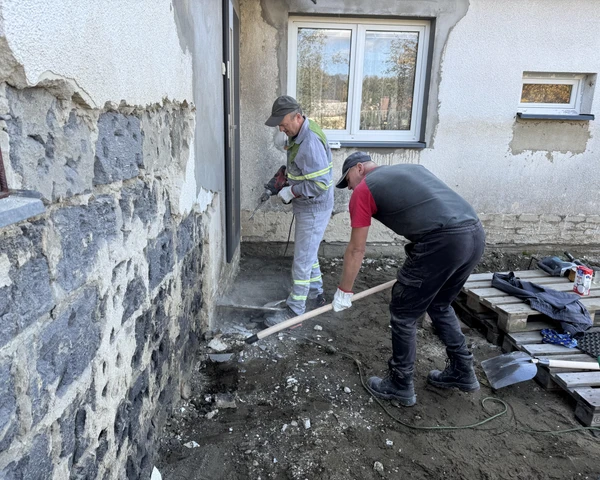
Flood relief in Mikulovice: A day full of solidarity and determination
In October, colleagues from MND Energy Storage set out to help people affected by the floods that swept through the Czech Republic and caused particularly severe damage in northern Moravia. Magda Lengálová has written a report for the readers of the Report, which can also serve as an inspiration - for example, to help the damaged municipality financially.
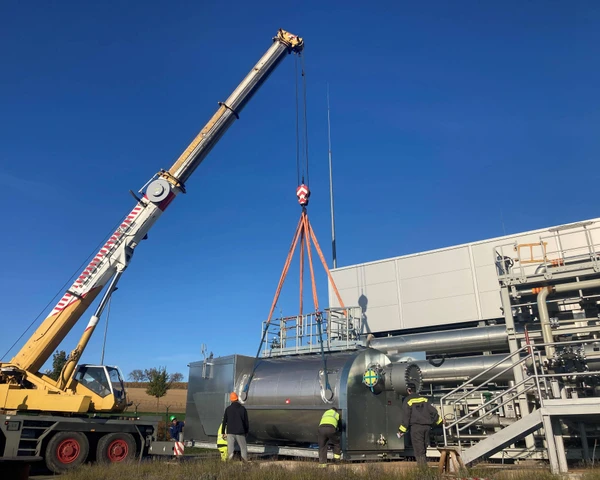
Installation of two inlet heaters for gas drying technology at PZP Dambořice
MND Gas Storage experienced a difficult period in 2023, due to the termination of a long-term storage contract, the non-performance of contractual obligations by the gas storage provider Gazprom Export and the subsequent uncertainty in the accelerated sale of unexpectedly vacant underground gas storage (UGS) capacity. On top of all the commercial problems, technical ones were added to the mix, and after testing the silica gel drying system, not all design parameters were achieved. The company needed additional capital to invest in feed heaters and to fine-tune the entire drying technology. At this stage, the company's share capital was increased and the subscription for new shares provided the necessary capital for the project.

Meeting with MND Energy Storage and MND Gas Storage customers
While the MND Party took place in Lužice on 13 June, the traditional customer meeting organised by MND Energy Storage and MND Gas Storage took place in Rakvice in the majestic Dominant Wine House. The event was attended by approximately 25 customers who came to find out what new products we are planning, as well as to enjoy delicious food and great wine.