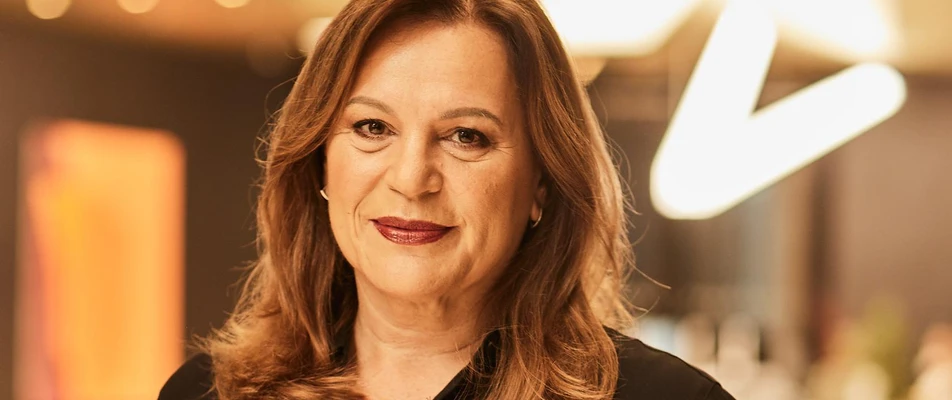
When the team creates contrasts, the company grows, says Jana Hamršmídová
The energy sector has traditionally been a male-dominated world. What are your views on the representation of women in business and on quotas?
I don’t think there’s any need to force anything artificially these days. In my view, the issue of women’s specific problems is largely a thing of the past. What’s far more important is the debate on coexistence, cooperation and respect between men and women. It’s not just about women, men or quotas – it’s about how to structure the working environment so that it functions as effectively as possible. It is true that the voices of both genders are valid, and it is beneficial for a company when both perspectives are represented. At the same time, I consider it important that a woman should not have to act like a ‘man’ in order to assert herself. Women have their own perspective, different predispositions, and deal with conflicts and problems differently – and that is precisely what has a very positive impact on how a team functions. I would go so far as to say that if there were more women in politics, its culture would look different.
How would you describe your leadership style?
It’s certainly not directive. I rely on a strong team – that’s absolutely key for me. Both the company and I will only be as good as the people around us. I rely on the people around me, and that means acknowledging that they’re better than me in many ways. My job is to create the conditions for them to succeed.
What do you think a high-quality team looks like?
It must be full of contrasts. A homogeneous team does not create a creative environment. You need innovators, thought leaders, implementers, controllers, but also pessimists. It is precisely this diversity that leads to good results.
Do you see the different perspectives of men and women among these contrasts?
In my immediate team, there are only two women – myself and Petra Kulčárová from HR. When I took on the role of director, the management team consisted exclusively of men and HR was not part of the top management. I promoted it because I consider HR to be very important. At the same time, I wanted another woman to be part of the team. I must say that my colleagues have really blossomed – the atmosphere has become much more relaxed.
We’ve also introduced management training. And I wanted the staff to see that even top management is working on themselves and developing. The impact has been huge, and watching my colleagues’ progress is a real joy for me.
Is that the biggest change you’ve brought to MND?
It’s more about an overall change in approach. I base the company’s value on three pillars: creating value for shareholders, for employees, and for the communities where we operate as a company. Previously, it was mainly about the figures. They are important, but they represent only part of the result. I want our employees to have a high-quality working environment, a good work-life balance, and fair remuneration.
At the same time, we want to be a positive force in the regions where we operate. If we do well in the region, we’ll attract good people. And if we have good people, excellent results will follow. We’ve become more open to collaboration with other companies, we draw inspiration from working with partners, and we’re developing new businesses – such as batteries or gas-to-power. Not everything works out straight away, but I don’t see that as a failure. It’s a path to learning.
The energy sector in general, and the EP business in particular, is a rather turbulent industry, which is also perceived as not entirely female-friendly. How difficult is it to build respect in this regard, respect that will withstand even the less popular decisions?
I feel I’m lucky with the people I work with. For the most part, I’ve met great colleagues with whom we’ve found common ground. I have to say I’ve encountered the macho attitude very rarely. In business, actually, never.
You worked in Austria for many years. What was that experience like?
It was an excellent life and work experience, even though the start was difficult. In every respect, I was the ‘wrong’ person for the environment there: a woman from the Eastern Bloc with no knowledge of German.
That sounds like a recipe for some pretty tough working experiences…
Gaining respect as the first representative of the “Eastern Bloc” in the company, without fluent German and, to some extent, being a woman, wasn’t exactly easy at first; at the same time, I was a mother to two teenage daughters. From Monday to Friday I was in Austria and I only spoke to my children, who were at secondary school, on the phone during the week. Mentally, I hit rock bottom.
Then I told myself that rather than giving up, I’d try to fight it out. I learnt the language and worked late into the night. Gradually, recognition came – even from my colleagues on the shop floor. I’m wired in such a way that I always have to prove my worth.
What do you think would help increase the representation of women in technical fields?
I don’t think it’s necessary to have more women in engineering or more men in teaching at any cost. What’s important is that everyone does what they enjoy and what makes sense to them. Women often face the family versus work dilemma. I faced it too.
I was divorced and left on my own with the children. At the same time, I had a job that I really enjoyed and found fulfilling – sometimes I’d drive out to a drilling site at night and take the children to school in the morning. I often asked myself whether I should have spent more time at home. We have one life, and we fill it with something. My children come first for me, but my work is also important to me.
Today I have a grandson and I usually only have time for him at the weekend. Even now I sometimes wonder if this is the right thing to do. But this way of life fulfils me. After all, it’s not set in stone that we have to be one thing or the other one hundred per cent. When we have children, we have a duty to look after them and give them love, but we don’t have to devote all our time to them. What matters is the quality of the time we devote to our family. My daughters tell me today that I’m a role model for them. That’s a great confirmation of my decision and a kind of absolution for me.
What do you think the ideal way to run a company would look like?
In principle, gender-balanced. The perspectives of women and men are different and complement each other. When a woman enters a male-dominated environment, she begins to be influenced by it to some extent. All-male teams tend to downplay ‘soft’ issues, which are actually very important for business. However, gender must never take precedence over ability.
What are you most proud of in your current role at the company?
The shift in mindset. Previously, the attitude here was “let’s just get by and call it a day”. Today, we’re shaping the future, seeking smart solutions and developing expertise that we can apply abroad too. We’ve moved from a standstill to growth.
Where do you want to take MND next?
I would like to further develop the company in the energy sector at an international level, using Hodonín as a technical centre of expertise and an incubator for experts. We have established the foundations of our energy mix and a good reputation. We would like to build on this and expand into regions where we have experience and where we see potential.

Editor-in-Chief
Other articles
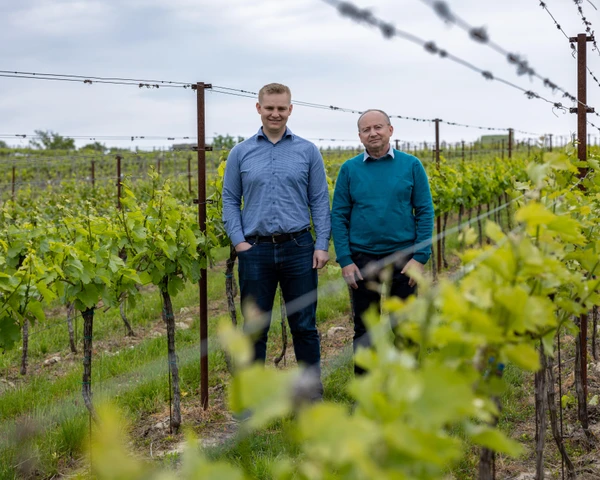
Between the pipes and the vines: When MND leaders also lead the vineyard
This report brings you the first part of the interesting winemakers who work in our group. We start in Čejkovice, where father and son, Jiří and Petr Št'avík, cultivate their lines. Petr works in MND as the head of the mechanical department and Jiří is the manager of the Dambořice storage facility.
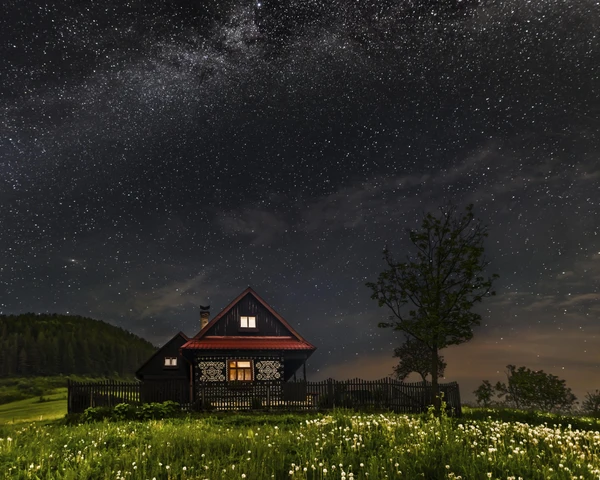
Comets, Perseids, meteors. Milan Pagac photographs the beauty of the night sky
During the day he looks underground and works on dynamic models of bearings, after work he takes his camera and looks up at the stars. In his spare time, MND bearing engineer Milan Pagáč is an astrophotographer. He combines two hobbies: photography and his interest in space observation, which has been with him since childhood. His pictures are well known to many MND employees - they have appeared in the calendars of Drilling, where Milan's wife also works.
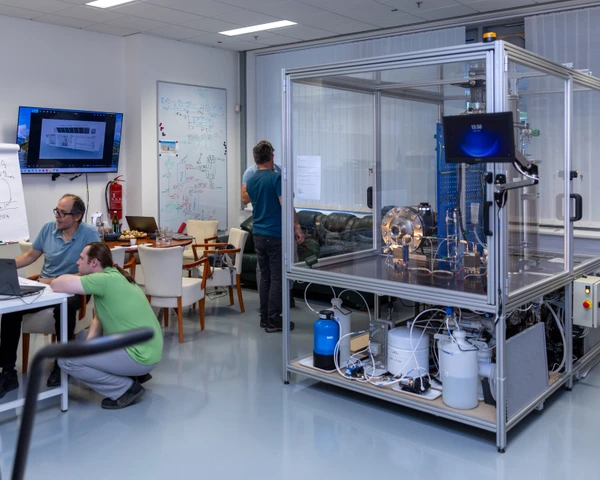
Hydrogen is absolutely strategic, says Nano Advanced founder
First wild water, then green hydrogen. Pavel Srbecký and Jakub Drnec are the main figures of the startup Nano Advanced, which MND joined last year. The company is developing an innovative hydrogen generator that is tailored to renewable resources. Its advantages are high efficiency and, above all, a longer lifetime. According to Pavel Srbecký, production is sold out two years in advance - and that's before the final product is finished. Such is the current market interest in hydrogen production machines.