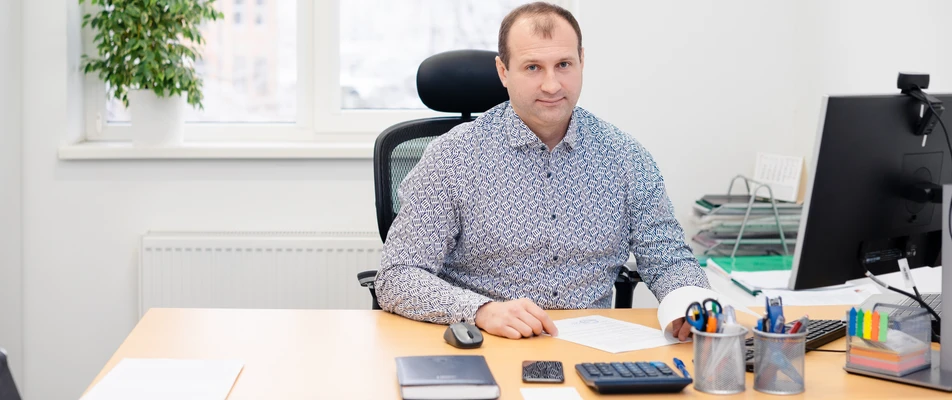
We work even when missiles fly over us, says MND Ukraine's technical chief
The MND Group has been operating in Ukraine for over ten years and, despite the war, it has managed not only to maintain operations but also to gradually develop gas production. However, everyday work takes place in conditions that most of us in Czechia or Germany can hardly imagine. We talked to Volodya Stebletsky, Technical Director of MND Ukraine, about how MND Ukraine works today, what is most difficult and what gives them the strength to continue.
First question – how are the roles divided between you and Lukáš Svozil?
Simply put, Lukáš is in charge of the overall management of all our companies, while I am mainly responsible for the technical side – i.e. drilling, gas pipeline construction, gas treatment facilities, as well as gas extraction and sales. We always make important decisions together. Even though Lukáš does not stay in Ukraine permanently, we are in constant contact. We call each other several times a day, have regular meetings in Teams, and Lukáš comes to Lviv in person about once a week. Intensive remote collaboration now comes completely naturally to us.
How often do you get out into the field yourself?
On average, twice a month, sometimes more often. It depends on what is happening at the moment. Most often, it involves drilling, commissioning technology or dealing with land issues. We also carry out regular checks for work safety reasons.
What is the most difficult thing for you now during the war?
The hardest thing is working under the constant threat of missile and drone attacks. Our facilities in western Ukraine have been attacked many times. We are always afraid for our colleagues and their families. When the alarm sounds in Lviv, we all think not only about work, but mainly about our homes, schools and nurseries, where our children are. The alarm itself has a huge impact on people's mental health.
What are the biggest technical challenges you will face in the coming years?
So far, we have experience with drilling to a depth of approximately 2,700 metres. Our goal is to drill to depths of 4,000 to 5,000 metres or more. This means high pressures and temperatures, which require special equipment and technological solutions.
How is the cooperation with your colleagues in Hodonín going?
Very well. We hold online meetings every week, we speak Ukrainian, our colleagues speak Czech, and we understand each other without any problems. Lukáš sometimes helps with translation. We also meet in person in Hodonín about once a month.
What would you like to improve in the future?
We would like to work more with special software and systematically train employees in its use. That would strengthen our team even more.
How is the team's morale today?
It's not easy – bad news comes in every day and the fatigue of war is noticeable. Nevertheless, our team's morale is still quite high and people are sticking together.
Do you have special safety rules?
Yes. We have clear rules for behaviour in the event of an alarm and maps of shelters in the vicinity of the office. Production facilities are equipped with mobile shelters.
What has been the most difficult decision for you personally since the war began?
Deciding in the early days whether to stay or leave for abroad. I was extremely worried about my family. My younger brother left with his family for Canada and offered me the same opportunity.
What helps you stay calm and focused?
Work and family. Work is a form of therapy for me, it keeps my mind off the war. Spending time with my family is also a great source of support.
How do you see the future of gas production in Ukraine after the war ends?
I believe that Russian gas will not be supplied to Europe in its original volumes for a long time and that it will be necessary to look for substitutes. Ukraine has significant oil and gas reserves, so there is enormous scope for developing their extraction.
Is the war also bringing technological or organisational innovations?
Definitely yes. A number of legislative changes have been made and bureaucracy has been reduced. Foreign companies are also interested in investing, which will bring new technologies to the country.
Is it difficult to find qualified people today?
Honestly, it is extremely difficult today. Qualified experts in the field of oil and gas extraction are practically unavailable on the market. They are all employed. If we urgently need someone, we have to recruit them from another company, which is becoming increasingly difficult.
What role does the mobilisation exemption play for employees at this time?
It is a huge relief and a great advantage for employees. In the current conditions, this exemption often carries more weight than the salary itself or other benefits.
Has the war had any impact on extraction itself?
At the beginning of the war, we had to temporarily stop drilling and seismic work, but we maintained gas extraction itself. Gradually, everything was restored, and today the war does not directly affect technical operations.
How are you managing logistics and technology deliveries?
Due to a shortage of personnel at suppliers, some work is taking longer, and we have had to adapt to this. Deliveries of technology manufactured in Ukraine are often delayed due to attacks on factories and warehouses.
Do you cooperate with the army to protect your facilities?
There is no direct cooperation. The army provides protection through air and missile defence systems. The details are, of course, classified.
Are there plans to mine the Zhukivska deposit? What stage are the preparations at?
Yes, we are planning the first drilling there in 2026. We are currently preparing the documentation and land. From a security perspective, it is a more complex area because facilities in the Poltava region have been repeatedly targeted by Russian attacks.
What role can MND play in the post-war reconstruction of Ukraine's energy infrastructure?
Ukraine's energy infrastructure is huge, and the state-owned Naftogaz has the largest share. We have been cooperating on projects with Ukrgazvydobuvannja and Ukrnafta for several years. Every contribution we make will be important.
Could the war ultimately strengthen the Ukrainian nation and its cohesion?
I would very much like that to happen. However, the chaos brought about by war affects people in different ways. In times of crisis, many people focus primarily on themselves and their families. Corruption scandals involving state authorities are also a source of great disappointment. However, I believe that after the war ends and the country's future becomes clear, people will come together and begin to rebuild.
What message would you like to send to your colleagues at MND in Czechia and Germany?
First and foremost, a big thank you for supporting Ukraine and our team. We would like to thank the MND Group for its trust and for continuing to invest even in such difficult times. We are proud to be part of this group. At the same time, we ask that the aid continue – Ukraine still needs support in the areas of defence and energy infrastructure restoration. We need more air defence systems and weapons to defend ourselves against the enemy. This war does not concern just one country, but the whole of Europe.

Editor-in-Chief
Other articles
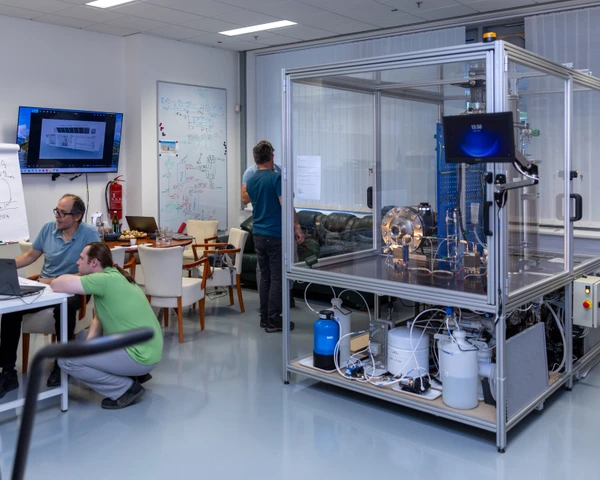
Hydrogen is absolutely strategic, says Nano Advanced founder
First wild water, then green hydrogen. Pavel Srbecký and Jakub Drnec are the main figures of the startup Nano Advanced, which MND joined last year. The company is developing an innovative hydrogen generator that is tailored to renewable resources. Its advantages are high efficiency and, above all, a longer lifetime. According to Pavel Srbecký, production is sold out two years in advance - and that's before the final product is finished. Such is the current market interest in hydrogen production machines.
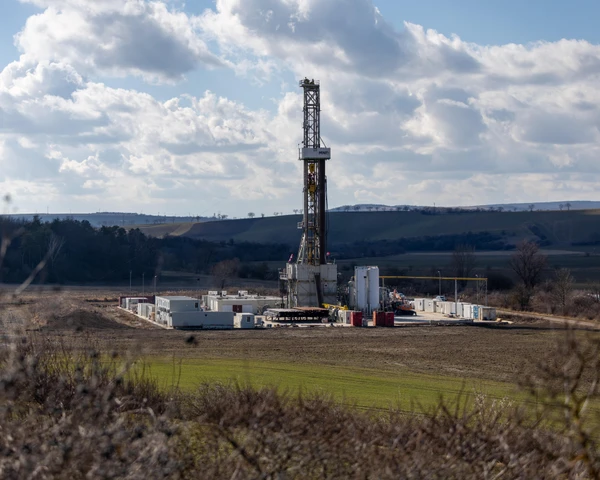
Second well test of Dambořice 9
The last drilling here was in the summer of 2023. While the frogs were croaking then, now, at the end of winter, there are plenty of hares and deer roaming the surrounding fields. And in the evenings, beavers are regularly seen cupitating in the adjacent Burnt Creek.
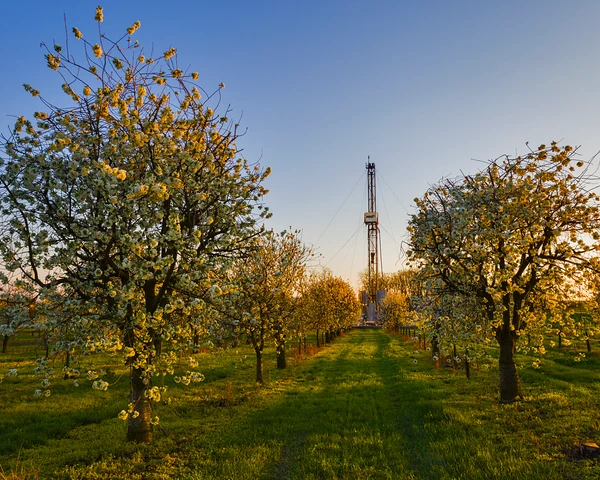
The life cycle of a borehole ends with reclamation. What does it involve?
The drilling and subsequent disposal of the probe is a fascinating process that can be likened to the life cycle from birth to death. Every well, whether exploratory or production, has its own life story. Repot is now bringing you a series that will present interesting reclamations of our specific sites one by one. But in this issue, let's talk in general terms about what such reclamation looks like, why it's done in the first place, and how much it actually costs.